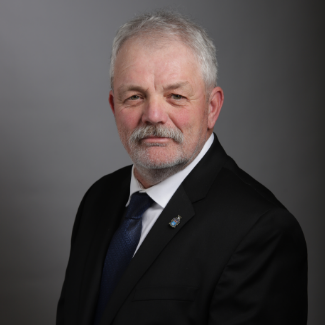
Hugo Kroon

Hugo Kroon
Candidate for Ward 1 Councillor
Hugo Kroon is seeking re-election as Ward 1 Councillor in Whitchurch-Stouffville, where he has served on Council for 12 years and currently holds the position of Deputy Mayor.
In an interview with 102.9 Whistle FM and Bullet Point News, Kroon discussed the cost of municipal services, traffic and road maintenance in rural areas, and how the Town can accommodate provincially mandated growth while preserving existing rural neighbourhoods and improving transit.
- Experience: Hugo Kroon has served on Council for 12 years and is currently Deputy Mayor.
- Taxes & Services: While acknowledging that cost of living and municipal taxes are major issues, he believes residents receive good value for the services provided by the Town.
- Rural Roads & Safety: Road maintenance, speeding, and traffic safety were identified as key Ward 1 concerns
- Responsible Growth: Kroon supports growth within established settlement areas while protecting rural areas and respecting existing neighbourhoods.
- Housing & Transit: He supports a wider range of housing options but said increased density requires better transit, which will eventually arrive.
The Interview
Tell us a bit about yourself and why you’re running.
Kroon said he has served on Whitchurch-Stouffville’s Council for 12 years, first representing the former Ward 3 and then the current Ward 1 for the past term. He currently serves as Deputy Mayor. His motivation for seeking another term comes down to public service and the opportunity to help residents.
“It’s public service,” Kroon said. “You wanna be a part of doing the right thing for people.”
The incumbent councillor described the role as fulfilling and said he looks forward to continuing his work on behalf of the community.
What is the leading issue in your ward, and what would you do as councillor to address it?
Kroon identified the cost of living, municipal taxes, traffic safety, and accessibility, including transit, as concerns that regularly emerge when discussing local issues with local residents.
He acknowledged that municipal services are expensive, but said he believes residents receive good value for their tax dollars when compared with other municipalities.
In Ward 1, Kroon said traffic concerns vary depending on where residents live. In estate developments and quieter rural areas, traffic is generally less of an issue, while residents along major regional roads face heavier traffic and speeding concerns.
He said maintaining rural roads, including snow clearing and general upkeep, is an important part of preserving residents’ quality of life. On busier roads, he pointed to York Regional Police enforcement and cooperation with York Region, which maintains many of the regional roads, as important parts of addressing concerns.
Ultimately, Kroon said, preserving the rural character of Ward 1 remains a priority for residents.
“The largest issue is maintaining what the residents love about living in the rural areas,” Kroon said. “It’s quiet, there’s no development, and it’s basically been the same thing for a long time…. We like it that way.”
Kroon committed to doing what he can to maintain that way of life.
What does responsible growth look like to you?
Kroon said residential growth in Ward 1 is concentrated in established settlement areas, primarily Stouffville and Ballantrae. He pointed to the Oak Ridges Moraine and Greenbelt legislation as protections against the kind of sprawling subdivision development that could otherwise extend into rural areas, adding that residents value those protections.
Within the settlement areas, he said growth must be managed in a way that respects existing neighbourhoods while providing housing options suited to changing demographics. Those options could include purpose-built rental housing, condominiums, and townhouses.
Kroon also stressed the importance of locating new housing where it can make use of existing services. He also noted that higher-density development and any reduced parking requirements need to be accompanied by a robust transit system capable of moving more people.
“There’s no point in increased densities if we can’t move the people around,” he said.
Kroon acknowledged that transit infrastructure is unlikely to be built ahead of the housing needed to support population growth. He said this could create a period in which development puts additional pressure on residents before transit services improve.
“Unfortunately, we’re not going to build the transit before we build… the housing stock. So there could be a period of time where growth will be difficult, and it will be intrusive,” he said. “But I think we’re on the right path, and the transit will come.”