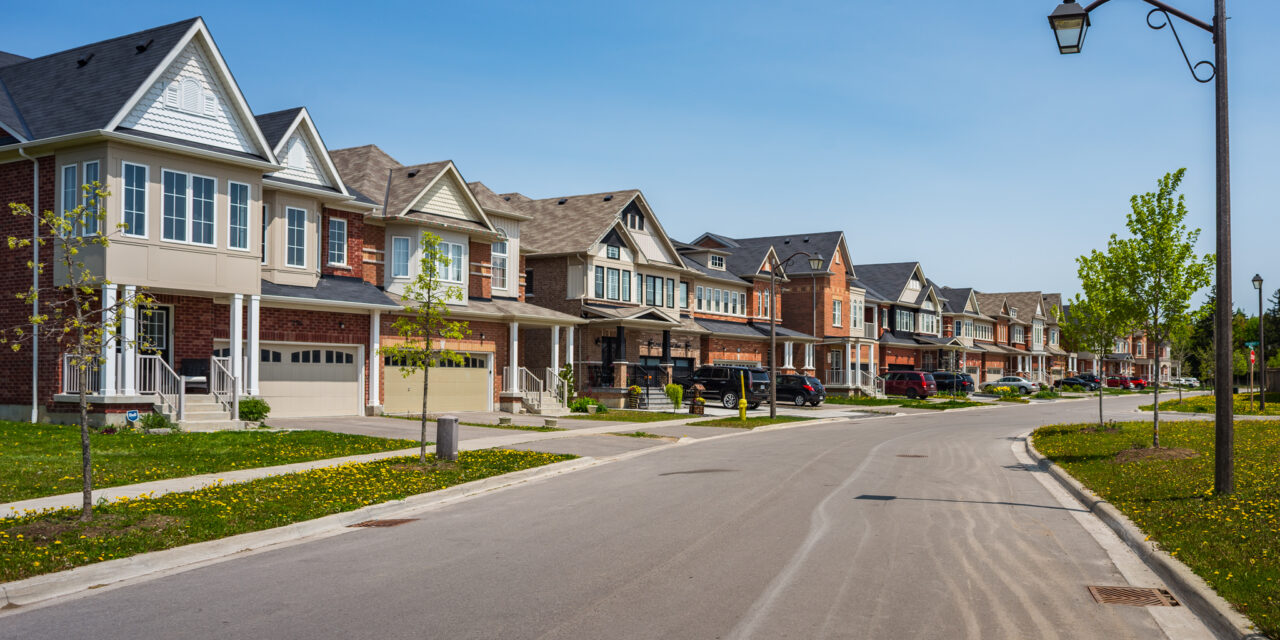
- Stouffville completed just 60 new homes in 2024, reaching only 11% of its goal.
- It was the lowest result among 50 Ontario municipalities assigned housing targets by the Provincial government.
- Commissioner of Development Services Dwayne Tapp says housing targets are better measured over 10 years, not year to year.
- Stouffville has 12,700 units in its development pipeline, with nearly 5,800 already granted some level of Council approval.
- Despite the 2024 slowdown, Stouffville has achieved 25% of its 2031 housing target, with 1,642 starts recorded to date.
- RBC reports Canada’s housing starts remain strong overall, but Ontario has seen a sharp decline tied to costs and weak demand.
According to Government of Ontario data, Stouffville saw only 60 new housing units completed in 2024. That amounts to 11 percent of the Town’s 542-unit target assigned by the Province, the lowest result among the 50 municipalities given housing targets through 2031.
The outcome marks a sharp reversal from 2023, when Stouffville recorded 1,141 new housing units. While long-term care spaces represented 416 of those new dwellings, the result exceeded the Town’s annual goal by 239 percent. That success earned Stouffville $2.6 million in infrastructure funding from the Province’s Building Faster Fund, a program meant to incentivize greater housing delivery throughout Ontario’s municipalities.
In comments to Bullet Point News, Dwayne Tapp, Stouffville’s Commissioner of Development Services, stressed the need to look at housing targets over a longer horizon.
“Housing targets are better observed over a 10-year period as there will always be volatility year over year,” Tapp said. “This year’s numbers are down, but as of December 2024, the Town has provided 1,642 housing starts, which is 25% of our target number of 6,500 units by 2031.”
The Town currently has 12,708 housing units in its planning pipeline. Of those, about 5,800 have advanced with some form of Council approval, whether through draft plan approvals or Official Plan and Zoning By-law amendments. However, many of those projects still need to clear the site plan approval stage, particularly multi-residential and higher-density developments.
A mere seven homes have been completed through the first half of 2025, however Tapp emphasized municipalities are not homebuilders. Their role, he said, is to ensure projects comply with Ontario’s Building Code and support complete communities. Despite the limited number of building permits issued, he pointed to meaningful progress on approvals this year.
“Stouffville has been busy with planning approvals despite our building permit numbers being down this year. In Q2 there were draft approvals for applications associated with 1,692 units, although some will require additional planning approvals through [the site plan approval process],” Tapp told us. “Around 4,650 additional units are proposed through active applications under review, the majority being various forms of townhouses and condos.”
The Town is not alone in facing a downturn within the province’s housing sector. In 2023, 18 municipalities failed to meet 80 percent or more of their housing target. That number grew to 27 in 2024.
According to a report by RBC Assistant Chief Economist Robert Hogue, Canada has seen more than one million housing starts over the past four years, marking the strongest period on record. However, while home construction has remained robust in much of the country this year, Ontario’s six-month housing starts average fell to its lowest level in a decade.
“This divergence is concerning, because it threatens to perpetuate severe affordability problems that exert social and economic hardship,” Hogue said. “The full impact of the current slowdown in housing starts won’t be felt for years in Ontario. It can take two, three or more years to complete a large multi-unit project once the foundation has been poured.”
“Any material drop in completions causing a slowdown in the housing stock’s expansion would make it that much harder to close the province’s housing supply gap,” he added. “It could increase the shortfall and aggravate the affordability crisis if it coincides with a rebound in population growth once Canada’s immigration policy is readjusted.”
Tapp linked the slowdown to weak buyer confidence, rising development and construction costs, and broader economic uncertainty, including higher interest rates on mortgage renewals. He said industry representatives expect activity to pick up gradually in 2026 as market confidence returns and trade pressures ease.
“Builders saw a rapid escalation of expenses for land, labour, and materials, compounded by municipal development charges and other fees in the past several years,” Hogue said, noting that inflated costs have impacted Ontario more than any other province. “These costs make it exceedingly difficult to bring new housing projects to market at prices prospective buyers can afford, particularly in the expensive GTA.”
When asked if the Province would consider rewarding municipalities based on factors more directly under their control, such as planning approvals and issued building permits, Ontario’s Minister of Municipal Affairs and Housing Rob Flack said the Building Faster Fund program will be reviewed for 2026.
“We will sit down and talk about the criteria for next year’s [Building Faster Fund] program,” Flack said during an announcement in London last month. “But still… Permits are not homes… We want to see real results… So seeing homes built, foundations in the ground, knowing that we’re going to get roofs over people’s heads is ultimately the goal.”
“But we will work with our municipal partners and make sure the program is fair but still has some stretch to it to get results,” he added.
Despite the slowdown, Tapp remains optimistic that Stouffville is positioning itself for a rebound in housing construction.
“What this indicates to me is that the development industry is preparing for the future when the housing market is healthy again and they will be ready to make building permit applications,” he said. “Town Staff will be ready to assist with building permit applications in an efficient manner once that demand returns.”