- Stouffville’s draft 2026 budgets propose a 3.5% property tax increase, adding about $80 to the Town’s portion of an average bill.
- Combined with York Region’s proposed 4.22% increase, total property taxes would rise by an average of $201 for local residents.
- A 4.4% water and wastewater rate hike, combined with a 2% infrastructure fee increase, will add roughly $60 to the average household bill.
- The Town’s annual 3% capital levy increase was removed, easing tax impacts but adding pressure to challenged infrastructure funding.
- Four new firefighters and two additional hires are proposed to meet growth and service demands.
- The 2026 capital plan outlines $36.3 million in projects, including Main Street Reconstruction and asset renewal efforts.
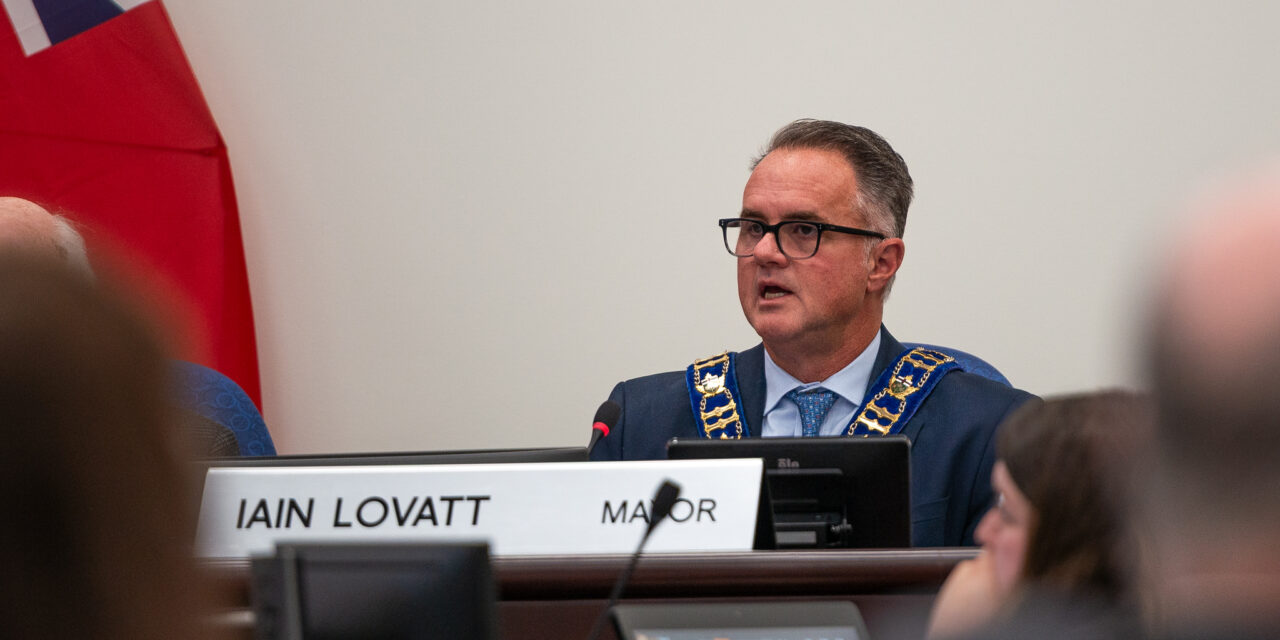
Mayor Iain Lovatt tabled Stouffville’s draft 2026 budget on Nov. 5, proposing a 3.5 percent property tax increase for next year. The change is expected to raise the Town’s portion of a typical Stouffville property tax bill by $80.
When combined with York Region’s proposed 4.22 percent levy increase, an average local taxpayer would pay $201 more next year.
The 2026 budget, Lovatt said, will allow the Town “to maintain service levels, manage rising costs, and continue investing in the priorities that Council and our community value most.” He added, “This budget delivers the essential services residents rely on today while investing in the future of Stouffville, keeping our community strong, sustainable, and ready for what’s ahead.”
Stouffville is responsible for collecting taxes on behalf of the municipality, York Region, and Ontario. Of the total property taxes collected from each property owner, 35 percent supports the Town, 43 percent goes to York Region, and 22 percent is directed to the Province for education.
“When we talk about the Town’s budget, we’re really only working with a fraction of the overall tax bill,” Lovatt said during a presentation to Council. “That’s why it’s so important for us to be strategic and transparent about how we allocate these funds.”
The proposed gross operating budget includes $82.7 million in expenditures, including the $3.2 million funding grant for the Stouffville Library and Latcham Art Centre. “When combined with the Regional and Education portions, the overall 2026 blended property tax increase for residents is estimated to be 3.04%,” the Town’s Budget Book states.
Stouffville maintained the sixth-lowest residential tax rate in the GTA in 2025, an affordability level Lovatt said was achieved without reducing service quality or community amenities. “Despite our modest tax rate increase, we will continue to deliver a wide range of high-quality services—from well-maintained parks and trails to vibrant recreation programs, cultural events, and responsive fire and winter services,” he said.
Lovatt also introduced the draft 2026 water and wastewater budgets, representing nearly $22 million in operating costs and $11.7 million in capital work. Stouffville’s proposed budget additions of over $1.25 million would address York Region’s annual three percent wholesale rate increase, resulting in a 4.4 percent blended rate increase for residents next year.
Combined with an additional two percent increase to the capital infrastructure fee, the average household would see a $60 rise in annual water and wastewater costs.
2026 will feature a number of water and wastewater capital projects, including a $3 million Stouffville Road sewer upgrade, an $875,000 sewer for MZO lands at Highway 48 and the Town’s southern border, and a $452,000 watermain project for Bethesda Side Road.
The Town is also preparing for contract negotiations with the Whitchurch-Stouffville Professional Fire Fighters Association, with the draft budget proposing four new firefighter positions. “This is about keeping our community safe and ensuring emergency services are ready to meet the Town’s growing needs,” Lovatt said during a recent budget meeting.
Two additional Financial and Infrastructure Management team members are proposed, though costs would be offset through other efficiencies if approved. The Town is also investing in its IT infrastructure, with a focus on enhancing protection against ongoing cybersecurity threats.
“These investments are essential to make sure that the Town keeps pace with the rapid changes in technology, and—just as important—to protect our systems and residents’ data,” Lovatt explained. “In 2024, we were experiencing over 1 million attacks on our network a month. That has decreased to 60,000 per month with the investment in technology that we have made over the last number of years, but the challenge is still there.”
Stouffvilles’s overall proposed expenses represent a $4.74 million (5.43%) reduction over 2025. Examples of achieved savings include road maintenance efficiencies, outsourced legal support services, and waste management cost reductions expected from the transition of blue box collection to Circular Materials. The 3.5 percent operating levy increase was required to offset revenue losses.
The budget also outlines an updated 10-year capital plan. It includes $36.3 million in planned spending for 2026 and is primarily funded through development charges, reserves, debt, and grants.
Major capital expenditures include $18.5 million for Main Street Reconstruction, $1.5 million for a new Rouge Trail connection, and $1.3 million for the Town’s road repair and rehabilitation program. An additional $500,000 would support development of a Secondary Plan for the Town’s whitebelt lands west of McCowan Road, and $475,000 would deliver a new parkette to Busato Drive.
Nearly one-third of Stouffville’s 10-year capital plan, more than $124 million, is dedicated to repairing and renewing existing assets. About $12.5 million would go toward rehabilitation efforts next year, funded by grants and reserve contributions. While an asset management funding gap of $3.9 million would remain, it marks an improvement over the $8.3 million shortfall identified in 2025.
Lovatt said the Town expects a surplus at the end of 2025 to bolster capital reserves and support ongoing infrastructure needs, which remain challenged by declining development revenues.
Amidst those challenges, additional capital funding will be crucial as the draft budget cuts the Town’s dedicated capital levy. Introduced at three percent in 2020, 2023, and 2024, the levy helped fund asset management and the Main Street Reconstruction project.
“ It wasn’t an easy choice, because that funding helps us maintain and renew our infrastructure,” Lovatt said. “But it was a necessary step this year to help keep the overall tax increase as low as possible while still addressing other important priorities.”
Although the levy’s elimination will ease next year’s property tax impact, Staff anticipate requesting future levy support “to further sustain the 10-year capital infrastructure plan and address long-term funding needs,” according to the Budget Book.
While recognizing the pressures faced by the Town, Lovatt emphasized Stouffville’s commitment to “thoughtful financial planning, transparency, and keeping residents’ priorities at the centre of every decision.”
Council will now review the tabled budget and may propose amendments before final approval. If no changes come forward, the budget will be automatically adopted on Nov. 27. Any amendments would require a two-thirds majority vote and delay approval until December.