- York Region’s 2026 budget was unanimously approved, raising the Region’s tax levy by 4.28 percent.
- An added 0.06 percent increase will fund a $25 million contribution to York University’s proposed medical school in Vaughan.
- With a focus on training primary care physicians, officials hope the school can ease hospital strain and the area’s doctor shortage.
- While supporting the investment, many Councillors expressed concern about growing downloading of provincial responsibilities onto municipal taxpayers.
- Police services, subway extension, and infrastructure funding needs represent the remaining portions of the 2026 Regional levy increase.
-
Stouffville’s 2026 budget was approved automatically without Council amendments, requiring a 3.5% Town levy increase.
-
Combined, the average local homeowner will pay about $203 more next year.
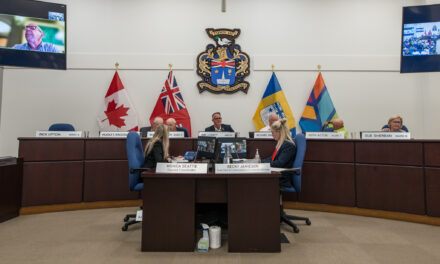
York Region approved its 2026 budget on Thursday, Nov. 27, endorsing an amendment to raise the proposed Regional tax increase to 4.28 percent. The change adds 0.06 percent to next year’s levy, enabling the Region to contribute $25 million toward York University’s planned School of Medicine in Vaughan.
The funding proposal received broad support, with many Regional Councillors describing it as an investment that reflects urgent healthcare needs. Ontario continues to face a severe shortage of family physicians, which places added strain on emergency rooms and overcrowded hospitals.
York Region leaders say the new facility will strengthen the pipeline of local interns, residents, and future family doctors, and the university has committed to encouraging graduates to remain in the community. The proposed 125,000-square-foot medical school will focus on training primary care physicians, and the university continues to fundraise toward its projected $350 million cost. It hopes to open the school in 2028.
Mirroring the approach used to support York University’s Markham campus, the $25 million contribution will be funded by reserves and provided in stages. While residents will face the single 0.06 percent increase next year, the levy will then be baked into the Region’s budget, generating $1 million annually.
The average household is expected to pay about $2 each year to support the school. That revenue will be directed into a dedicated reserve that, over the next 25 years, will replace the funding provided up front to York University. The City of Vaughan supplied the land for the project, and Mayor Steven Del Duca estimated its value at $20 million.
Stouffville Mayor Iain Lovatt decided against moving a motion requesting that York University prioritize domestic applicants, noting that provincial policy already governs the issue. “Changes to the Ministry of Training Colleges and Universities Act [requires] 95% of admissions at Ontario med schools to be domestic students, and I think that’s actually great,” he said.
Markham Mayor Frank Scarpitti said the school can’t come soon enough given the urgent primary care need. Noting that 23 percent of the population lacks a family physician, he described the hospital system as overwhelmed. “Hallway healthcare has run out of hallways,” he said.
Recognizing its ability to ease those pressures, Scarpitti argued the Region’s investment will deliver greater value than if the same amount were directed elsewhere: “As much as this is an investment in a medical school…in many respects, it’s also an investment in the extension of our hospitals. $25 million probably wouldn’t get you a whole lot at any one of our hospitals, in terms of capacity.”
Even so, Councillors emphasized that their support comes alongside ongoing concern about expanding provincial downloading. Many said the contribution is necessary but ultimately reflects a failure of senior governments to adequately fund post-secondary education and frontline care.
“This, in my mind, is purely to fill a hole in the healthcare system because we are so desperately short of family doctors… It’s not a responsibility of municipalities,” Richmond Hill Mayor David West said. “I think there needs to be a recognition that we need to find a way to put the things back into the provincial and federal realm that belong in the provincial and federal realm.”
Newmarket Mayor John Taylor explained that provincial funding formulas for healthcare, hospitals, and post-secondary institutions have not kept pace with inflation. As costs climb and government funding stagnates, he said municipalities are increasingly expected to finance projects outside their mandate.
“Many years ago, I really stood against the idea of supporting provincial responsibilities, but it’s become crystal clear that that’s the landscape we’re in,” Taylor said. “If we don’t play the role, if we don’t step in and fill this void, then we won’t get critical projects like this.”
West and others asked for a more structured approach to similar requests in the future. They argued that major proposals deserve a detailed, standalone review process rather than being introduced during annual budget deliberations. “We probably do need a Staff report in the future to give us some guidance, because this won’t be the last time that we get a request like this,” West said.
Beyond the medical school funding, the 2026 budget includes a 3.22 percent levy increase supporting York Regional Police’s $547 million operating budget, which rose 12.7 percent due largely to wage pressures. An additional one percent capital infrastructure levy, applied annually, will continue to support the Yonge North Subway Extension.
The 4.28 percent Regional levy increase applies only to the York Region share of property tax bills, which accounts for about 43 percent of the total. Combined with Stouffville’s 3.5 percent increase, which also passed automatically on Nov. 27 with no amendments from Council, an average local homeowners will see an estimated $203 rise in their total 2026 property taxes.
“With the adoption of the 2026 York Region budget, we have confirmed a responsible, forward-looking plan that responds to the needs of our growing communities,” Regional Chairman Eric Jolliffe said, concluding this year’s budget process.
“Together, we have put forward a plan that provides significant and sustained support for York Regional Police to ensure our communities remain safe, well-served, and responsive to the evolving needs and concerns of our residents.”
*This article was updated to note that Stouffville’s 2026 budget was also approved Nov. 27