- Mayor Lovatt has introduced a motion to wind down Stouffville’s ASE program by Dec. 31, 2025, unless directed otherwise by the Province.
- The motion follows Premier Doug Ford’s Thursday announcement that legislation to ban ASE cameras will be introduced next month.
- Ford again called speed cameras a “cash grab,” arguing they do not slow drivers and leave little room to contest tickets.
- Data shows ASE has reduced speeding, and several provincial stakeholders expressed support for the program.
- Lovatt maintains ASE is effective but said he will follow Provincial direction, requesting reimbursement and funding for alternative safety measures.
- Ford has promised funding for other traffic calming tools, including radar signs and speed humps, though details are unclear.
- Council will vote on Lovatt’s motion during their Oct. 1 meeting.
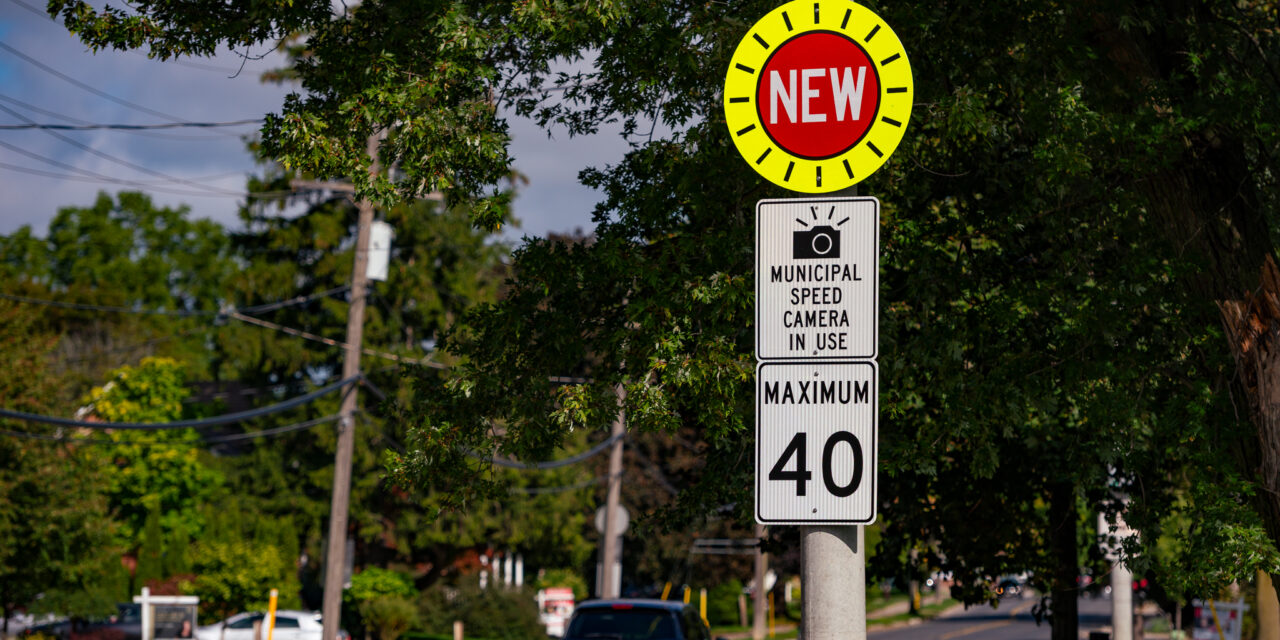
Mayor Iain Lovatt will table a motion on Oct. 1 directing Town Staff to wind down Stouffville’s Automated Speed Enforcement (ASE) program by the end of 2025, unless the Province decides otherwise.
The move follows Premier Doug Ford’s escalating calls for municipalities to cancel their ASE programs. During a press conference in Vaughan on Thursday, Ford said legislation to ban the speed cameras would be introduced within “a few weeks.”
“In the face of tariffs and economic uncertainty, governments need to be putting more money back into people’s pockets to help make their lives more affordable,” Ford said. “But, unfortunately, too many governments are doing the opposite.”
Once again calling the cameras a “cash grab” that unfairly penalizes motorists for going just a few kilometers over the limit, Ford argued drivers have little recourse to contest tickets or properly make their case. He also accused municipalities of using automated enforcement as a quick source of revenue.
“Mayor Lovatt, from Stouffville, gave me a call and told me he’s taking them out and putting it in front of Council,” Ford said. He praised Ontario mayors who did not implement or are actively removing their own ASE cameras, calling them leaders who “are standing up for the taxpayers… Because enough is enough.”
“We know what this is all about,” he added. “If you really want to slow people down, speed cameras do not slow people down.”
That claim runs counter to recent data from York Region and early results from the Town of Whitchurch-Stouffville. York Regional Police has also supported ASE programs, as has the Ontario Association of the Chiefs of Police. Additional endorsements have come from stakeholders such as the Ontario Traffic Council, Association of Municipalities of Ontario, and Sick Kids Hospital.
In comments provided to Bullet Point News on Sept. 12, Lovatt said ASE “has proven to be the one traffic calming tool that delivers real and immediate results in slowing down traffic and protecting pedestrians and cyclists.”
A comprehensive mid-year report detailing the outcomes of Stouffville’s ASE program was originally expected for Council’s Oct. 1 meeting. However, according to Lovatt, the report needed to be updated to reflect the Province’s new direction. He said it will be delayed until their Oct. 15 meeting.
“I am still a strong proponent of ASE. The cameras work. Sadly, the Province has a different opinion and will institute legislation banning them,” Lovatt told us. “I spoke with the Premier about my concerns in removing them, but I told him I would bring a motion to Council next week with my recommendations to support traffic safety without ASE and a request of the Province to cover costs.”
The motion’s cost recovery requests include full reimbursement for any expenses tied to ending the ASE program and funding for alternative road safety measures. As part of the review, Town Staff will report back on all cancellation costs while continuing to explore other traffic calming solutions, with new options from the Engineering and Public Works division expected to be presented to Council by late 2025.
Ford has promised funding for replacement road safety measures such as larger speed limit signs with flashing lights, radar displays, speed humps, roundabouts, curb extensions, and raised pedestrian crossings. However, the amounts municipalities will receive and how the funding will be distributed remain unclear.
In 2017, Kathleen Wynne’s Liberal government passed legislation that would enable municipalities to launch automated speed enforcement programs. That effort was supported by current Vaughan Mayor Steven Del Duca, who was Transportation Minister at the time.
After facing public backlash over their ASE rollout, Del Duca and Vaughan’s Council paused and later cancelled the program altogether. He has since become a leading voice calling for an end to automated speed enforcement across the province, saying he was honoured to have Premier Ford in Vaughan to announce the pending legislation.
The Ford government finalized ASE regulations in 2019 and framed the initiative as a municipal responsibility. A Transportation Ministry spokesperson told the Toronto Star then: “Automated speed enforcement is a municipally driven initiative, as municipal governments are in the best position to determine what needs to be done in order to improve road safety on municipal roads.”
The planned ban drew sharp criticism at York Regional Council. Markham Mayor Frank Scarpitti said municipalities invested in ASE in good faith and should be reimbursed. “The Province of Ontario…should be reimbursing the Region and local municipalities that have spent the money to put in place a program that was authorized by the Province,” he said.
Scarpitti also questioned Ford’s proposed alternatives, warning municipalities risk wasting money on measures that may later be prohibited: “I think that, if we were to be naive enough to put in place some of the suggested [traffic calming] solutions…we would see new legislation in six months time saying…’We didn’t mean for you to put in speed humps to slow down motorists through a school zone.’”
“Things happen, not much thought, at times, are given to it, and we end up paying the cost,” he added.
Richmond Hill Mayor David West echoed Scarpitti’s financial concerns but stressed that safety should remain paramount. West said ASE has proven effective in slowing drivers and cautioned that alternatives such as speed humps or flashing signs cannot match its results. He warned speed humps would interfere with emergency services and urged Regional Staff to advise the Province on realistic solutions.
“If there are some ideas out there that will actually be equivalent to the safety improvements that we’re seeing with ASE, then I’m all ears. But I don’t know of that,” West said. “I think we need to get our experts to weigh in right now to be able to give the government some input as to what we expect.”