- New rules will prohibit pets in all municipal cemeteries, except for leashed service animals or family pets attending burial services.
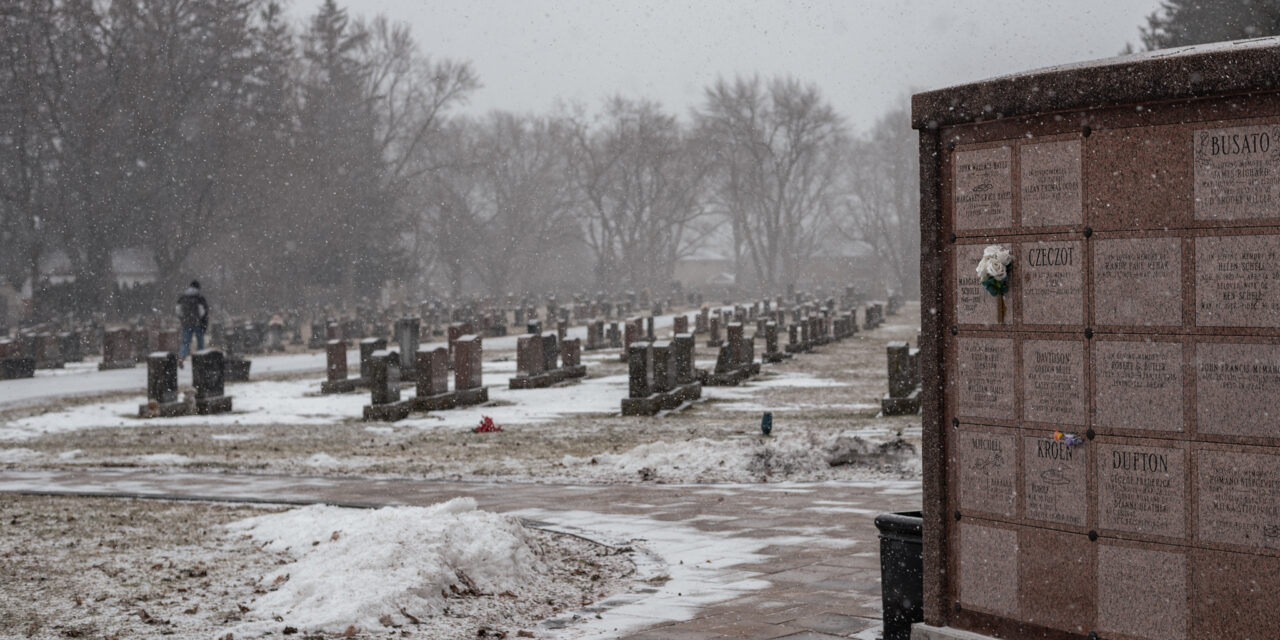
- The by-law change followed concerns raised by residents about uncontrolled dogs, waste, and impacts to gravesites in Stouffville Cemetery.
- A deputation from resident Greg Murray urged Council to focus on enforcement and education rather than a ban.
- Councillors debated the issue, with some citing respect for the deceased and others questioning how a ban would be enforced.
- A proposed compromise limiting the ban to Stouffville Cemetery failed in a 3–4 vote, with Sherban, Lovatt, and Smith in favour.
- The total ban on pets in Town cemeteries passed, with Sherban and Lovatt opposed.
- The by-law now moves to the Bereavement Authority of Ontario for final approval before taking effect.
Stouffville Council has approved an updated cemetery by-law that will prohibit pets in all five municipally operated cemeteries, with very limited exceptions.
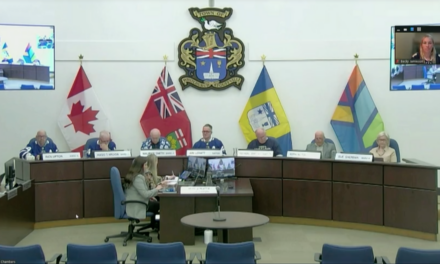
Adopted during Council’s March 11 meeting, the revised by-law bans pets unless they are a leashed service animal or a family pet attending a burial service for the deceased. The update also includes several administrative and operational changes to modernize the Town’s cemetery regulations.
The pet prohibition stems from concerns raised by residents during a past town hall attended by Mayor Iain Lovatt and Councillors Sue Sherban and Keith Acton. In response, Sherban brought forward a resolution on May 7, 2025, seconded by Councillor Hugo Kroon, directing Staff to amend the by-law to disallow pets in municipal cemeteries.
Deputation Stirs Debate
While few members of the public submitted comments during the required month-long by-law consultation period earlier this year, resident Greg Murray urged Council to reconsider the proposed ban during Wednesday’s meeting. He argued the change would not only restrict pets, but residents themselves.
Murray described his routine of walking his dog through Stouffville Cemetery, saying the experience offers both a peaceful setting and an opportunity to learn about those buried there. “That is the purpose of a cemetery. It is to keep legacies alive, to teach those of us who are vertical the lessons from those who are horizontal,” he told Council.
Across Ontario, Murray added, many cemeteries are moving toward greater public accessibility. “Legacies must be seen to be remembered,” he said.
Instead of introducing a ban, he suggested the Town should focus on stronger by-law enforcement, improved signage, and public education to address concerns about pets and their owners. Saying he had never seen by-law officers in the cemetery, Murray questioned how the Town would realistically enforce a prohibition.
“They certainly do not have the capacity to enforce a total ban on entry,” Murray claimed. “The moment enforcement begins is when this issue will hit the front pages, when dozens of Stouffville residents a day will be issued tickets for peacefully walking into a public space.”
Council Deliberates
Several Members of Council quickly voiced support for the proposed restrictions.
Councillor Richard Bartley, whose father is buried in Stouffville Cemetery, cited concerns about off-leash dogs and waste being left behind. “I think the cemetery is a sacred place, it is a quiet place, it is a place to reflect,” he said.
Councillor Keith Acton thanked Murray for his comments but said the deputation did not alter his position. He pointed to ongoing concerns about pets urinating on burial plots, markers, and monuments.
While acknowledging that some cemeteries permit pets, Acton said that does not make the practice appropriate. “It is totally unacceptable and totally disrespectful” for pets to use cemeteries as washrooms, he said.
Sherban indicated Murray’s remarks had given her pause. She said the deputation offered a “whole new perspective” and noted that her husband, who passed away in April 2024, would have appreciated her bringing their late family dog during visits.
She also observed that proactive by-law patrols had taken place, and no further complaints about pets had surfaced since the original town hall where the issues in Stouffville Cemetery were raised.
Lovatt acknowledged the competing viewpoints, describing the proposed amendment as the result of a public process responding to resident concerns. However, he said many pet owners are respectful when visiting cemeteries and suggested a less restrictive approach might be worth considering.
“The challenge that we face…is by-law enforcement. If there’s a complete prohibition of animals in the cemetery…unless there’s enforcement…the by-law is not really worth the paper it’s written on,” Lovatt said.
He referenced Arlington National Cemetery in the United States, which prohibits pets, noting that strict security likely plays a role in the effectiveness of that rule.
“I’m in a bit of a conundrum trying to figure out which way to go with this,” Lovatt added. “Because I think that unless there is enforcement…it’s really a challenge to ensure compliance and change behaviour.”
Before the final vote, Sherban proposed a compromise that would restrict pets only in Stouffville Cemetery while permitting them in the Town’s smaller rural cemeteries. She suggested the approach would allow Staff to continue monitoring behaviour in those locations to further assess whether bans are warranted.
Kroon opposed the idea, arguing cemeteries should be treated consistently across the municipality. “That some cemeteries can be treated as the sacred and holy places that they are, and others arent…I just don’t understand how we could support that kind of thing,” he said.
Sherban’s amendment failed in a 3–4 vote, supported only by Sherban, Lovatt, and Councillor Maurice Smith. Council then voted on the by-law portion that would prohibit pets in all Town cemeteries. The measure passed, with Sherban and Lovatt opposed.
How We Got Here & What’s Next
Stouffville’s current cemetery by-law was adopted in 2012. Since then, the Town has assumed responsibility for Brillinger Cemetery and Bloomington Christian Cemetery, partly prompting the need for an updated framework.
The municipality currently oversees five cemeteries, each categorized by operational status. While all are maintained by the Town, Stouffville Cemetery is the only primary site where new burial lots continue to be sold. Bloomington Christian and Harman cemeteries remain active without ongoing lot sales, while Bloomington and Brillinger cemeteries are considered inactive.
Under Ontario’s Funeral, Burial and Cremation Services Act, municipalities must complete a four-week public consultation period before adopting a new cemetery by-law. That consultation ended Feb. 16, generating two submissions from residents: one regarding after-hours vehicle access, and another asking Council to reconsider the pet ban.
Although the Town opted not to restrict vehicular access at Stouffville Cemetery, the updated by-law removes the option for interments or disinterments on Sundays and holidays unless special arrangements are approved by the cemetery operator.
Additional housekeeping changes clarify monument and marker rules, increase the permitted size of memorials on lots and plots, raise the minimum thickness requirement for cornerstones to three inches, and require families with more than two adjoining lots to consult the cemetery operator if they wish to exceed standard monument size limits.
Before the new by-law can take effect, it must be reviewed by the Bereavement Authority of Ontario. While the Registrar may request minor adjustments, Town Staff say they have worked closely with the authority throughout the by-law update process.