- Prime Minister Mark Carney and Premier Doug Ford announced $8.8 billion to support municipalities that reduce development charges by as much as 50 percent.
- Mayor Iain Lovatt says the success of the initiative will depend on whether municipalities are fully compensated for lost revenue.
- Development charges are viewed as prohibitive to housing delivery but fund critical infrastructure needed to support growth.
- Stouffville’s comparatively lower DC rates have limited its reserves, Lovatt said, making deep cuts more difficult to absorb than in other municipalities.
- Local leaders warned that reducing DCs without adequate replacement funds could lead to higher property taxes and cancelled projects.
- Some questioned whether cutting development charges will meaningfully improve housing supply or affordability.
- Greater understanding of potential financial implications will come after program regulations are finalized.
While welcoming the removal of federal and provincial taxes on newly built homes, Stouffville Mayor Iain Lovatt says significant questions remain around a new push from Ottawa and Queen’s Park to reduce municipal development charges (DCs) across Ontario.
Announced March 30 by Prime Minister Mark Carney and Premier Doug Ford, the Canada-Ontario Partnership to Build will provide up to $8.8 billion in capital funding. The money is intended to support towns and cities that cut development charges on new residential construction by as much as 50 percent over the next three years.
“Funding will be prioritized for municipalities that reduce and maintain reductions on development charges, which can add hundreds of thousands of dollars to the cost of a new home,” an Ontario backgrounder reads.
“This new infrastructure funding will offset much of the financial impact of DC reductions,” it adds. “However, municipalities will also be expected to support DC reductions, so that all three levels of government are supporting increased housing supply and affordability.”
A list of municipalities “where DCs are seen as cost-prohibitive and where growth is essential to support Ontario’s future” will also be required to enact DC reductions, and it is not clear whether Stouffville will be included. Uncertainty therefore remains, making it difficult to assess local implications.
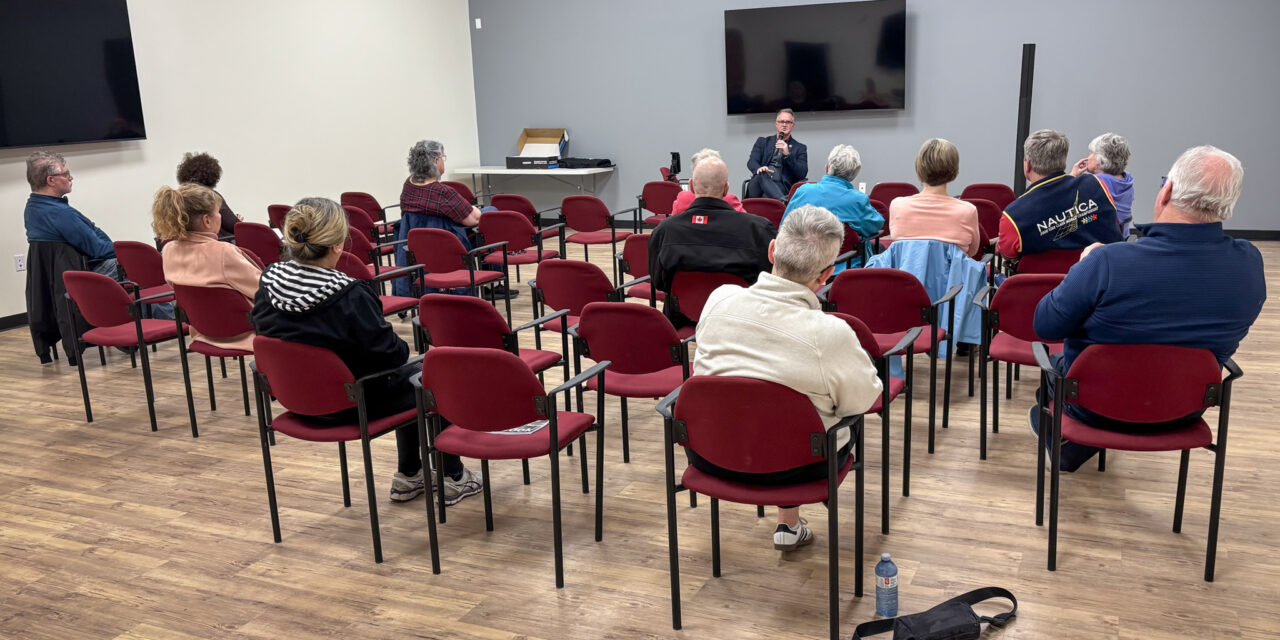
For Lovatt, the initiative hinges on whether municipalities are fully compensated for lost revenue. Speaking at a town hall meeting on Monday night, he emphasized that DCs are the primary funding tool for growth-supportive infrastructure in communities like Stouffville.
“I believe there is probably going to be a 50 percent reduction in development charges on new homes, but how is that captured? How does that impact us?” Lovatt said during the meeting. “The devil is in the details on these, and we don’t know what the details are.”
The combined impact of eliminating sales taxes on new homes, alongside potential DC reductions, could lower costs by as much as $180,000 per unit, he said. Since the announcement, local interest from developers has increased.
However, in Lovatt’s view, any resulting cost burdens should not fall on property taxpayers. “How does the Town make up those funds for DC reductions? That’s what we don’t know,” he said, reiterating municipalities’ longstanding call to be “made whole” when revenues are reduced by senior government policy changes.
The Mayor also stressed that the framework needs to account for fiscal differences between municipalities. Larger cities, he noted, have historically charged higher DC rates and, in many cases, accumulated substantial reserves.
“A lot of municipalities, larger municipalities, who had very expensive development charges… padded up their reserves when they had the opportunity,” he said. “We’re talking hundreds of millions of dollars in reserves.”
Stouffville has maintained relatively lower rates to encourage development, resulting in more limited reserve growth. Lovatt pointed to Vaughan’s recent decision to halve its DCs, drawing an important comparison: although its larger reserves make such reductions easier to absorb, Stouffville rates are still lower.
“Not all municipalities are created equal. We’re not in the same position as Markham, Richmond Hill, or Vaughan,” he explained. “So are we supposed to reduce ours in half and be a quarter of what Vaughan is? Council is going to have to weigh that out once we get the regulations.”
The Town’s fire reserve was cited as an example, and Lovatt noted it carries a negative balance following the rebuild of Station 5-1 and the purchase of a new ladder truck. While day-to-day operating costs for departments like Fire and Emergency Services are covered by property taxes, DCs fund capital needs such as new stations and fleet expansion required to serve a growing population.
“If we don’t see development happen, we’re not able to replenish that reserve,” Lovatt said. That concern underscores the difficult balance municipalities must strike between encouraging growth through lower fees and ensuring adequate infrastructure funding, all without placing undue pressure on existing taxpayers.
Concerns Extend Beyond Stouffville
In an April 9 memorandum submitted to York Regional Council, Commissioner of Finance and Regional Treasurer Laura Mirabella outlined already-planned DC rate reductions of two to nine percent as part of York Region’s 2026 by-law update. Those cuts were largely driven by previous legislative changes, and Mirabella highlighted other Council-approved DC deferral programs.
Speaking during a Committee of the Whole meeting the same day, Richmond Hill Mayor David West said further reductions without compensation could undermine municipal interests.
“We have reduced development charges already with all of the things that have happened since Bill 23,” West said. He warned that continued cuts would “eventually lead to the quality of the community potentially not being as high as people would expect it to be, and that’s not helpful to anybody.”
West also cautioned against shifting more costs onto property tax roles, which places a heavier burden on residents who can least afford it. “Putting more on property taxes, which is the most regressive tax that we pay, and less on other forms of taxation, which are far more fair, is actually making the affordability gap worse,” he said.
Newmarket Mayor John Taylor questioned whether reducing development charges would have any meaningful impact on housing supply. He referenced years of mandated changes aimed at lowering development costs and alleged municipal barriers while pointing to Ontario’s still-struggling housing sector.
“If this policy intervention is going to cost [billions of dollars], we should start off with some level of confidence that…it’s going to work,” he said, warning that DC reductions without replacement revenue risk long-term fiscal sustainability. “We’ve tried what, five, ten different interventions? We’re not moving the markets.”
Regional Councillor Tom Vegh, also from Newmarket, questioned whether the reductions would translate to lower purchasing prices or greater profits for developers. “ I don’t think it’s going to move the needle on the cost of housing,” he said. “I think it’s just a bit of a windfall for the development community.”
Markham Mayor Frank Scarpitti struck a more optimistic tone, describing the announcement as a potential opportunity provided funding commitments adequately match revenue losses. “ I’ve stated very clearly… whatever you support us financially for infrastructure projects, we’ll gladly reduce [DCs] the next day,” he said.
Scarpitti emphasized that cost recovery is essential: “It’s gotta be dollar for dollar… If it’s 25 cents on the dollar… the answer is ‘Thanks, but no thanks.’” While speaking just for Markham, he suggested a possible openness to covering ten percent of resulting costs over the three-year period. However, in comments echoed by Taylor, Scarpitti also raised the threat of fiscal unsustainability.
“Peel Region, because they cut their development charges, has an outstanding liability of $1.3 billion,” he explained, adding that there is no firm answer as to how the funds will be replaced. “If it’s not replaced, it will mean taking out projects that they legitimately had recognized were going to be needed for growth… or some impact to property taxpayers.”
“I certainly don’t want to put [York Region] in that same position, and certainly not the City of Markham,” Scarpitti added. “I think there’s a lot more answers that we need to get.”
Georgina Regional Councillor Naomi Davison also contested elements of the Canada-Ontario partnership, calling the proposed 50 percent reduction target “completely arbitrary.” She noted that development charges are based on detailed financial modelling tied to projected growth and infrastructure needs.
“ When you look at the development charges, it’s a mathematical calculation that takes a team of accountants to figure out,” she said. Rather than imposing blanket cuts, Davison suggested senior governments could directly fund specific municipal projects, allowing local DC rates to be reduced.
“Cutting DCs in half, all it does is charge the taxpayer more on their property taxes, which nobody wants,” Davison added. “So I think the Province and the Feds have made the right decision to get in partnership…and start funding us, but they should just pick projects…and we’ll adjust the development charges accordingly.”
While early details suggest municipalities will submit a list of applicable projects for funding, procedural timing remains unknown. The Association of Municipalities of Ontario (AMO) announced it will be working with the Ontario government as program regulations are finalized.
“It’s positive that there appears to be recognition that reduced municipal DCs need an offset from other levels of government,” AMO wrote in a recent policy update. “We look forward to working with the Province to develop an equitable, efficient, and flexible program design that accounts for the diverse ways municipalities fund growth and use DCs.”
Cover image provided by and used with permission from the Office of the Mayor of Whitchurch-Stouffville