- Stouffville is weeks away from the transition to Ontario’s new Blue Box program.
- Circular Materials will take over recycling collection and processing from local municipalities in 2026.
- Stouffville and five other northern York Region towns will continue to be serviced by GFL under a new contract.
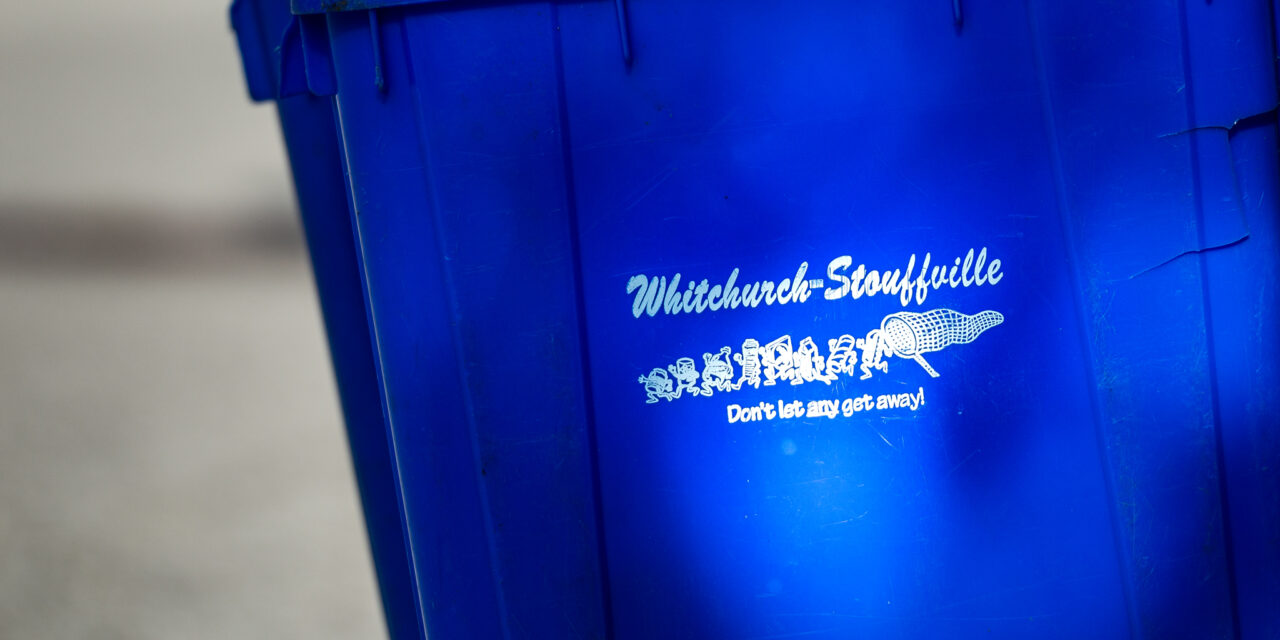
- Blue box collection will shift to bi-weekly pickup, with concerns raised about the mandatory 95-gallon recycling carts.
- N6 mayors have united to seek additional bin options from Circular Materials.
- Mayor Lovatt says a 65-gallon cart may be offered following a meeting today.
- The 95-gallon carts would still launch, with potential swaps to smaller bins offered as soon as April.
- While marking progress, N6 municipalities have faced challenges advocating for operational changes.
Earlier this year, Stouffville residents began raising concerns about the potential introduction of large, 95-gallon recycling bins that will replace the smaller, open containers used today. The oversized carts were the only replacement option outlined in a recently finalized agreement, as Circular Materials prepares to assume recycling responsibilities from the Town and York Region in 2026.
Under the Province’s extended producer responsibility model, nonprofit Producer Responsibility Organization (PRO) Circular Materials will manage the collection and processing of blue box materials at producers’ expense. Collection work is contracted to local operators such as Miller Waste and GFL.
The system is intended to reduce municipal costs and encourage producers to limit the amount of packaging and recyclable material they generate. The Ontario government says the Blue Box Regulation also expands and standardizes the types of materials that can be put in the blue bin, a benefit they believe will improve waste management efforts.
Richmond Hill, Markham, and Vaughan will continue with Miller, their current collections operator. The six northern municipalities—Stouffville, Aurora, Newmarket, East Gwillimbury, Georgina, and King, known collectively as the N6—will remain with GFL.
Unlike Miller, which is not making bin changes under its new contract, GFL is shifting to trucks equipped with mechanical arms. That transition will require a switch to large cart-based collection able to support new bi-weekly pickup, representing a 50 percent reduction in collection service for residents.
With the December 31 transition approaching, community concerns about the new carts and reduced collection frequency have intensified. Ontario’s Ministry of Environment, Conservation and Parks, which oversees the Blue Box program, is now involved.
Stouffville Mayor Iain Lovatt says limited consultation, compressed timelines, and ongoing challenges faced by N6 staff in seeking operational adjustments from Circular Materials pushed York Region’s northern mayors to work together. While bi-weekly pickup is a factor, he said the primary objective is securing more than one cart size for residents.
While there may be some relief on the horizon, Lovatt also wants residents to understand how the transition unfolded and where responsibility ultimately lies for operations and decisions made under the Province’s and Circular Materials’ new system.
Bin Size & Municipal Impacts
“What Circular Materials is saying is, ‘We’re giving you a bigger bin because we’re halving the service, so you’re going to need more space to store your recycling,’” Lovatt said in a recent phone interview, noting the shift from weekly pickup to once every two weeks.
“The problem is some people can’t accommodate them,” he continued. “And we are very concerned that Circular Materials’ decision to not provide more size options will result in people putting their recycling in the garbage.”
Residents living in townhouses or smaller homes may lack storage space for the carts. Seniors and those with mobility challenges could struggle to maneuver them, especially when full. For some, the most convenient option to keep recyclable waste from piling up could be putting some in the garbage.
A shift of recycling into the municipal waste stream also weakens the incentive system meant to push producers away from excessive packaging. It amounts to a download, one “that will not only increase our costs for garbage collection, it will result in less waste being diverted from landfills and incineration at energy-from-waste facilities,” Lovatt said.
“That defeats the entire purpose of the producer responsibility model,” he stated.
A Rushed Timeline Without Consultation
“First, it’s important to understand that we didn’t get details about the contract that Circular Materials later signed with GFL until August,” Lovatt said. He emphasized that the municipality was never consulted in the process.
According to the Mayor, N6 staff raised concerns about bin size at a September meeting with Circular Materials following their finalizing of GFL’s agreement.
“They basically said, ‘Sorry, but this is what we’re doing,” the Mayor said. The matter was then escalated to the N6 Chief Administrative Officers and department commissioners, who approached the PRO with the same concerns.
“Circular Materials did not agree to a meeting with the CAOs until mid-October, and we soon found out that they were told the same thing,” Lovatt detailed. That prompted N6 mayors to intervene, resulting in a meeting with Circular Materials on Tuesday.
Furthering their advocacy efforts, Lovatt contacted Circular Materials CEO Allen Langdon directly and asked him to attend the meeting. Langdon joined, but Lovatt said many of the responses mirrored those given previously to municipal staff.
“‘That’s not good enough, you need to offer bin alternatives,’ we told them,” he added. The N6 mayors then scheduled a follow-up meeting with Circular Materials for Friday, Nov. 14, with the hopes that new options might come forward.
New Contract, New Complications
Because the N6 has had a long working relationship with GFL, Lovatt says they also approached the company seeking clarity. They hoped GFL might help advance the discussion, but soon discovered the avenue was closed.
“We found out, in the 11th hour after a meeting was scheduled but not accepted by GFL staff, that they can’t meet with us,” Lovatt said. “In Circular Materials’ procurement contract, they included a line item that says GFL is not permitted to speak with any N6 municipalities… How do you accept a procurement offer that basically represents the municipalities, and you can’t talk to us?”
When Bullet Point News contacted GFL for comment, a customer service representative said the company could not speak to contract details and referred inquiries to Circular Materials.
After repeated frustrations, Lovatt said he contacted the Ministry of Environment, Conservation, and Parks directly and spoke with Minister Todd McCarthy. Although Circular Materials is responsible for operations, Ontario’s Blue Box Regulation falls under the Ministry.
Circular Materials Responds
In a response to Bullet Point News, Circular Materials said decisions about carts and collection schedules were made through a competitive procurement process. They declined to comment on contract costs, citing the proprietary nature of commercial agreements.
“We are in active conversation with the mayors of the N6 municipalities about their feedback regarding the new recycling carts and bi-weekly collection schedule and will continue to engage with them, their staff, and N6 residents through the transition to ensure the delivery of an efficient recycling program in the region, in line with the Provincial regulation,” a spokesperson said.
Asked whether alternative cart sizes could be offered in 2026, and whether the contract restricts GFL’s communications with municipalities or media, Circular Materials did not provide direct answers.
“We understand this is a change for residents,” the spokesperson continued, adding that the larger cart size was chosen to “ensure the overall efficiency and effectiveness of the program.”
The organization said it is focused on introducing a system that will allow new materials to be collected, including black plastic containers, coffee cups, deodorant and toothpaste tubes, and ice cream tubs.
The Ministry Weighs In
A reply from the Ministry restated the benefits of shifting costs from municipalities to producers. Officials said the framework, developed through consultations with municipalities and industry, will create a standardized list of accepted recyclables across Ontario, improve waste diversion, and reduce landfill use.
“As we complete this transition, which will save municipalities hundreds of millions of dollars each year, Circular Materials will continue to work closely with communities to ensure a smooth transition,” a Ministry spokesperson said. “The Resource Productivity and Recovery Authority will closely monitor implementation to ensure that producers fulfill all regulated requirements.”
The Ministry did not respond to inquiries regarding the apparent lack of consultation with municipalities in the development and implementation of Circular Materials’ and GFL’s collections contract.
A Smaller Bin Option Could Be Coming
Today’s follow-up meeting included three Ministry staff members, Lovatt said, adding that he believes they are engaged. While Circular Materials has not confirmed any changes, he thinks progress was made through the discussion.
One thing appears certain: residents will start with 95-gallon carts at the beginning of next year. However, Lovatt said Circular Materials could swap them for 65-gallon versions a few months later. Although not a significantly smaller option, replacements could be available by request as early as April.
“I support a transition to the totes, but never in a million years did I contemplate that they were only going to offer the largest bin that’s available,” he said. “They acknowledge that there is a need to accommodate people that don’t want these large bins. The frustrating thing for me is that they are still committed to rolling out these 95-gallon bins as planned.”
In an apparent effort to help the community better understand jurisdictional responsibility for the changing service, Lovatt is preparing a letter to all residents outlining the new system. The Town will also install signage describing the Province’s decision to transition to the new Blue Box program, along with contact information for Circular Materials’ customer service division.
This article has been updated to correct a continuity error pertaining to the Ministry’s response. We apologize for the mistake.