- York Region’s updated SM4RT Living Waste Management Master Plan goes to Regional Council for final adoption on Oct. 23.
- If approved, the Region will seek expressions of interest from local municipalities for a potential energy-from-waste garbage incineration facility.
- Stouffville Mayor Iain Lovatt said the Town could be interested in hosting the new plant along Highway 404.
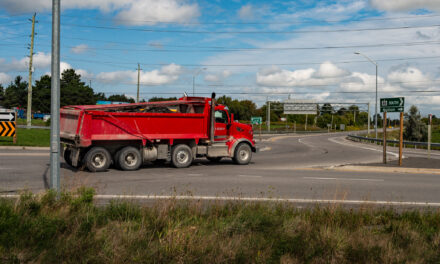
- Ontario’s landfill capacity is expected to run out in less than 10 years, increasing pressure to secure long-term waste disposal options.
- The plan includes two additional projects: a southern waste transfer station and a leaf and yard waste facility in East Gwillimbury.
- Combined costs for the two projects are estimated at $46 million to $72 million, with projected savings of $13 million over 10 years.
- With implementation of Ontario’s Blue Box program, Regional recycling equipment will be replaced with added transfer and yard waste capacity.
Pending final Regional Council approval later this month, York Region is moving ahead with an expansion of its waste management capabilities to boost processing capacity, improve system resilience in the face of market pressures, and reduce long-term costs.
The initiatives form part of the next five-year update of the Region’s SM4RT Living Waste Management Master Plan. The policy’s latest review identified key priorities for adapting to increasing demand, regulatory changes, and rising contract costs while maintaining the Region’s commitment to the four Rs: reduce, reuse, recycle, and (energy) recovery.
While Stouffville and other local municipalities are consulting residents on the next waste collection contract, the Region is concentrating on the infrastructure needed to support that collection, make processing more efficient, and bring more of the system into local control.
Those considerations include a possible York Region energy-from-waste incineration plant in the next 10-15 years, and Stouffville may formally indicate its interest in hosting the facility.
Garbage Incineration & A Possible Stouffville Energy-From-Waste Facility
A large majority of York Region’s residual garbage is incinerated at energy-from-waste (EFW) facilities. The disposal method helps the Region divert more than 90 percent of collected waste from landfills, and the combustion process fuels steam turbines to generate electricity.
The Region co-owns the Durham York Energy Centre (DYEC) with Durham Region and contracts additional EFW capacity from Emerald Energy in Brampton and Reworld in Niagara, New York.
In 2024, York Region sent 32,110 tonnes of garbage to DYEC, 47,693 tonnes to Emerald, and 51,049 to Reworld. An additional 28,524 tonnes were sent to landfill. Those figures represent about 87 percent of the Region’s contracted annual EFW processing capacity and 57 percent of its allotted landfill capacity.
A recent Staff report explains that Ontario has a dwindling landfill supply, and available capacity is “forecast to last less than 10-years.” While York Region maintains cross-border landfill contracts, Staff warn that tariffs and potential border disruptions make reliance on U.S. facilities an ongoing risk.
Additional landfill capacity will be required to accommodate bulk waste not suitable for EFW processing. Access to available landfill also serves as a backstop during any EFW facility maintenance or unplanned shutdowns, which can and do occur due to the complex nature of their operations.
Landfill limitations have shifted many municipalities’ waste management focus to EFW. The DYEC was built in Clarington with some ability to grow, and Staff expect to secure more capacity through expansion underway at the Emerald plant. However, given the area’s projected population numbers, York Region is considering the feasibility of developing a local EFW facility to meet future needs.
“Alternative long-term options…could include the development of a local energy-from-waste facility, which could take 10 to 15 years to establish,” the SM4RT Living Plan states. “Given the length of time to site, secure permitting, and construct this type of facility, Staff will research and explore this further in the next five years.”
During York Region’s Oct. 9 Committee of the Whole meeting, Stouffville Mayor Iain Lovatt urged his fellow Council Members to begin that process. He proposed that the Region seek expressions of interest from municipalities willing to host a local EFW facility.
“We know that we are going to be growing to 2 million people by 2051, and there’s a lot of trucking involved…in where we send our garbage,” Lovatt said. “There’s no capacity at the DYEC, even if they do expand, to manage the tonnage that we will generate in York Region.”
His amendment was adopted. In comments to Bullet Point News, Lovatt said an EFW facility is something he would consider for Stouffville.
“When I became Mayor, I never would have thought I would take such an interest in garbage,” Lovatt said. “The DYEC is an incredible facility, powering over 10,000 homes in Clarington with waste from York and Durham regions.”
According to the Mayor, the Region invested in the Clarington plant because there was no local municipality interested in hosting its own. Proposals are regularly met by opposition from residents and environmental groups worried about pollution and health impacts, which has been the case with expansion of Emerald’s operations in Brampton and the DYEC.
The Region of Durham has produced a video explaining how the DYEC operates, while operators like Emerald highlight modern technology that reliably combusts, filters, and monitors for toxins and pollutants at levels exceeding regulatory standards.
Lovatt was impressed by the process during a recent site visit. Aside from meeting a need and helping to power the grid, he also sees real advantages to cutting collection vehicle transport distances—including reducing the number of trucks driving to the U.S.
“On a recent tour with Stouffville Council, there seemed to be an openness to exploring what hosting a facility along the 404 could mean for us,” Lovatt said. “EFW checks all the boxes for me… If we are going to take reducing our greenhouse gas emissions seriously, we really should look for a York Region location where trucking our garbage is at a minimum.”
“Why wouldn’t we consider diverting waste from landfill, and instead generate hydro to power Stouffville and the province?” he added.
Markham Regional Councillor Joe Li also said his city may express interest, noting the potential efficiency gains from co-locating the facility with other waste infrastructure. Staff committed to initiating the request for interest process by mid-2026.
Waste Infrastructure Expansion & Reconfiguration
Two additional capital projects have been proposed as part of the SM4RT Living plan: a new Region-owned waste transfer station serving southern York Region, and a leaf and yard waste processing facility adjacent to the existing Waste Management Centre in East Gwillimbury.
The two projects are expected to cost between $46 million and $72 million, depending on land and construction costs. Establishing a Region-owned yard waste facility and contracting out its operations could lower operating expenses by 30 to 40 percent. Combined, the investments are forecast to deliver $13 million in savings over 10 years compared to continuing with the current model.
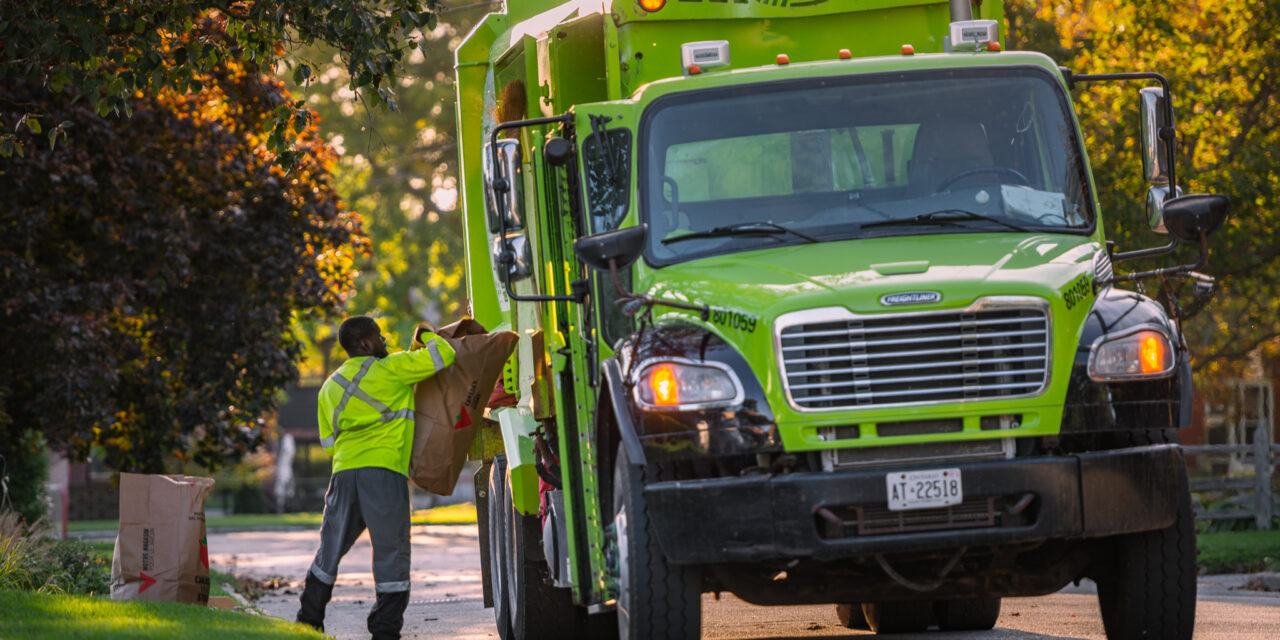
The Region has two waste transfer stations: one in East Gwillimbury and another in Markham operated under contract. As population and densities rise, and as housing targets intensify, Staff say an additional site is needed. A southern transfer facility would add capacity and shorten haul routes for municipal collection trucks, cutting fuel use and emissions.
“A location for the facility has not yet been identified. Once Regional Council approves the SM4RT Living Plan, York Region will look to identify and purchase a suitable property,” Lindsay Milne, York Region’s Director of Waste Management & Forestry, said in comments to Bullet Point News.
Meanwhile, with the Blue Box program set to transition to full producer responsibility next year, the Region plans to decommission recycling equipment at the Waste Management Centre and repurpose the space for waste transfer operations and yard waste processing.
The proposed East Gwillimbury leaf and yard waste facility would help the Region manage the estimated 66,000 tonnes of annual yard waste expected by 2050. Currently, all yard waste is processed under contract by Miller Waste Systems at its Richmond Hill composting facility, which operates under a long-term agreement expiring in 2030.
Staff report that York’s overall waste management costs rose 37 percent between 2017 and 2024, outpacing inflation. Yard waste processing costs are more than 50 percent higher than those in comparable Greater Golden Horseshoe municipalities, a disparity Staff largely attributed to limited local competition.
“Establishing a Region-owned Leaf and Yard Waste facility will provide more certainty about location, provide enhanced responsiveness to emergency events such as storms and other extreme weather events that generate extra yard waste for residents, and provide an opportunity for additional community benefits such as compost sales and giveaway days,” the report concludes.
The new assets will join the future Convertus organic waste processing and biogas facility, currently under construction in East Gwillimbury. York Region expects that facility to process up to 140,000 tonnes of organic waste annually over the next two decades.
Navigating the Blue Box Transition & Producer Responsibility
Another focus of the Region’s waste management strategy is navigating and advocating for new producer responsibility regulations, which shift financial and operational responsibilities for certain types of waste to the companies that produce it.
That includes adjusting to the Province’s upcoming Blue Box program. The change will see Circular Materials, a Producer Responsibility Organization (PRO), assuming responsibility for collecting and processing blue bin recyclables at eligible properties throughout the region.
“The transition has been challenging due to relentless advocacy from producers and trade associations to amend regulations,” the Staff report states. “The Province finalized amendments on Sept. 4, 2025, that, while improving from its initial proposal, will reduce performance targets and delay expansion of the program.”
“The Region continues to advocate to the Province for strong extended producer responsibility policies with high targets and effective oversight to ensure environmental and economic outcomes are achieved,” Milne told us. “Municipalities are staying on top of this producer-lead program, as anything that doesn’t end up in the blue box will continue to be managed by municipalities either in the garbage or green bin streams.”
With Council approval, Staff will have delegated authority to negotiate agreements with PROs to ensure York Region is fairly compensated for expenses tied to the management of items such as tires, batteries, electronics, and hazardous materials.
Staff explained that producer responsibility programs are still in the process of developing competitive markets, and there has been little interest in taking part in formal municipal procurements for such waste management services from PROs.
“As a result, many of our peer municipalities are negotiating directly with PROs to secure compensation for collection costs and management of transportation and processing,” the report adds.
Circular Economy & Community Impact
Finally, the SM4RT Living Plan reaffirms York Region’s efforts to further a circular economy, emphasizing waste reduction, repair, and reuse over disposal. Since 2020, the Region has partnered with more than 30 community organizations to tackle food waste, promote repair and reuse, and deliver environmental education programs. Those partnerships will continue to expand over the next five years to help ensure benefits and understanding reach residents.
The Region also plans to expand some depot services, proposing pilot programs for appointment-based unloading and new collection events for hazardous waste.
Future initiatives proposed for waste depots, community partnerships, and education will be supported by the discontinuation of backyard composter distribution. Staff say the units are easily accessed outside of the Region’s program, and the change will free up approximately $25,000 in funding per year.
The updated SM4RT Living Waste Management Master Plan is expected to return to Regional Council for final approval on Oct. 23. If adopted, the projects and policy directions will be reflected in York Region’s 2026 operating and capital budgets.