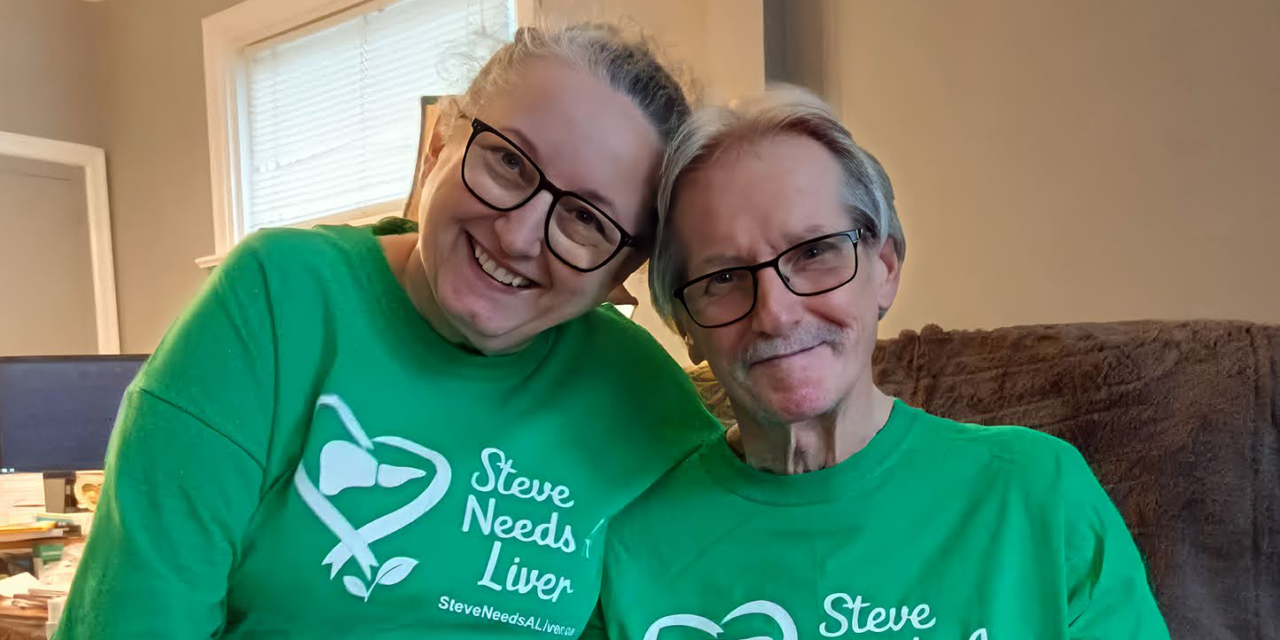
- A Stouffville family is seeking a living liver donor for longtime resident Steve Stark, who has end-stage liver disease.
- Stark was added to the transplant list in December 2025, but qualifies only for a living donor transplant.
- Eligible donors must meet strict criteria, and only 20% to 30% of candidates are typically approved.
- Stark will be removed from the transplant list in January 2027 due to program age limits.
- Living liver donation is generally safe, though it involves major surgery and potential risks.
- The family continues to raise awareness in hopes of finding a suitable match in time.
The Stark family is urgently searching for a living liver donor to save the life of longtime resident Steve Stark, whose decades of local service and community ties now underscore a race against time.
Born and raised in town, Steve spent roughly a decade at the Scarborough GM plant before beginning a 30-year career with the Town of Whitchurch-Stouffville’s Public Works department. According to his wife, Kim, even routine errands reflected that reputation.
“He loved that job, and more importantly, he loved everyone he worked with,” Kim said. “A typical errand to Canadian Tire would always take him a couple of hours due to the many people he would run into, and of course he had to have a quick chat!”
Steve was diagnosed with end-stage liver disease in June 2024, just weeks before a planned hip replacement surgery that was ultimately cancelled. Over the following year, he made frequent visits to Markham Stouffville Hospital as doctors worked to stabilize his condition.
With ongoing treatment, including medication and strict dietary management, his health has improved enough to qualify for transplant. Steve was added to the liver transplant list on Dec. 12, 2025; however, he is eligible only for a living donor transplant, narrowing his options.
“We need to find someone who is between the ages of 18–60, blood type O or A, healthy, and willing to donate up to 70% of their liver,” Kim explained, noting that a donor’s liver can regenerate within months. “It would give Steve a second chance at life.”
The Stark family has been actively searching for a match through social media outreach, community events, and blood drives. While several individuals have come forward, and some have advanced to medical testing, a suitable donor has yet to be identified.
Time remains a critical factor. Steve, now 72, will be removed from the transplant list on Jan. 22, 2027, when he turns 73, due to program age limits.
Finding a compatible donor is a complex and highly selective process. Beyond blood type compatibility, candidates must meet strict anatomical, physical, and psychological criteria. Kim said more than half of potential donors are typically ruled out during evaluation, aligning with broader medical data suggesting only 20% to 30% of prospective donors are ultimately approved.
Living liver donation is widely considered safe, but it remains a major surgical procedure with potential risks. These can include pain, nausea, infection, and bleeding following surgery. Additional complications can include blood clots, pneumonia, hernia, and bile duct issues. In very rare cases, donors may experience liver failure requiring transplantation or death.
Steve’s transplant would be performed through University Health Network’s Living Liver Donor Program at Toronto General. UHN reports strong outcomes and no donor deaths in its program history, though all risks are thoroughly discussed with participants.
“Over 1,200 living liver donations at the Toronto General Hospital have been performed since 1996,” UHN’s donor manual explains. “To date, there have been no donor deaths, nor have any donors experienced a disabling long-term complication.”
Kim emphasized that potential donors remain anonymous to her and her family throughout the process. Individuals can withdraw at any time, and they receive ongoing medical monitoring before and after surgery.
Despite the challenges, the Stark family remains hopeful that sharing Steve’s story will lead to a lifesaving match. “If you’re willing to learn more about becoming a living liver donor, or if you can help by sharing this message, it could make all the difference,” Kim said.
More information is available at steveneedsaliver.ca