- Ontario’s new Blue Box program shifts recycling responsibility from municipalities to producers starting Dec. 31, 2025.
- Stouffville households will receive a 95-gallon wheeled cart, with recycling pickup moving to every other week using automated trucks for collection.
- Residents have raised concerns about storage of larger bins, especially in townhouses and smaller homes.
- Businesses and institutions will need to arrange for private waste collection contracts.
- Downtown Village businesses from Albert Street to Park Drive may see modified municipal collection services.
- The Town will continue to manage collection of garbage, organics, bulky items, and yard waste.
- An Oct. 2 open house at Town Hall will give residents a chance to share feedback those waste collection services.
- Comments received will inform possible changes to the Town’s waste collection contract, such as standardized bins for garbage and organics.
Stouffville residents will see major changes to how recycling is collected and managed beginning next year, as Ontario rolls out its provincewide transition to the new Blue Box program. The initiative aims to hold producers accountable for the packaging they create while relieving municipalities of collection costs.
Starting Dec. 31, 2025, Ontario municipalities will no longer oversee blue bin waste collection. The responsibility will shift to producers that manufacture packaging and paper products, who will be required to both fund and manage the collection of recyclable materials.
In Whitchurch-Stouffville, curbside recycling for residential households will continue, but the service will be delivered by Circular Materials, a nonprofit organization representing producers. Until then, current waste services remain unchanged.
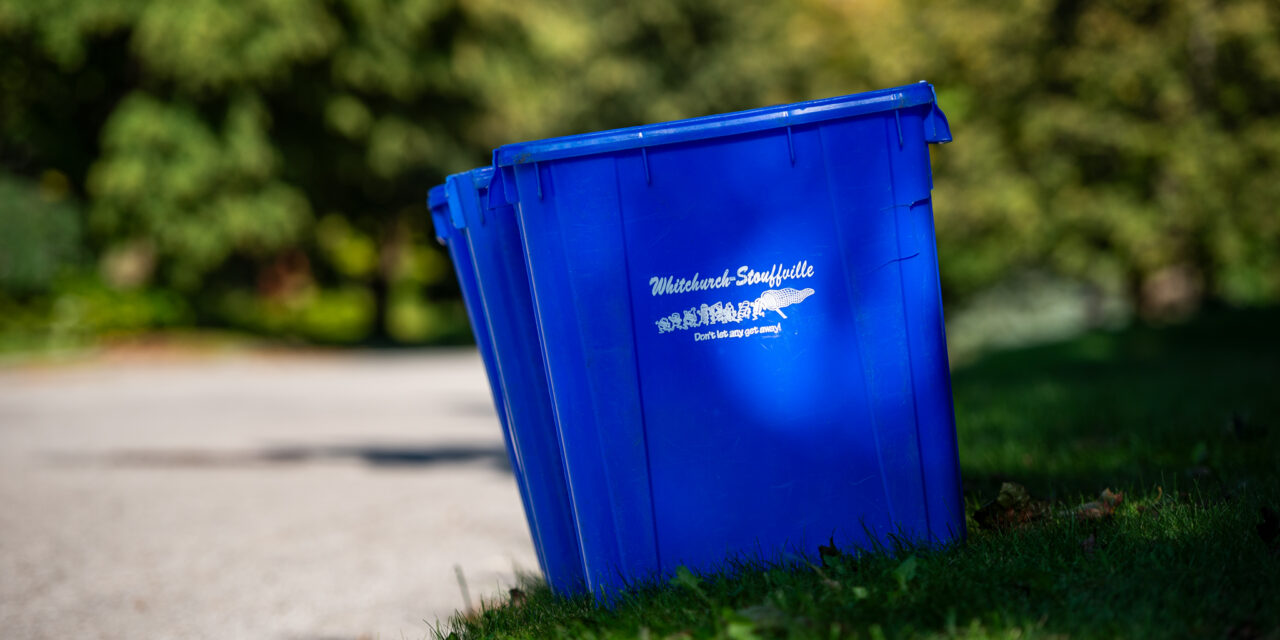
Every household will receive a 95-gallon wheeled recycling cart, and details on bin distribution and any adjustments to collection days will be shared closer to the transition. Recycling pickup will move from weekly service to every other week, with automated trucks equipped with mechanical arms replacing manual collection.
The new carts are already drawing concern from residents, particularly those living in townhouses and compact homes with limited storage space. Many fear the bins will end up stored at the front of properties, creating both inconvenience and visual impacts on neighbourhood streetscapes.
“The Town was not made aware of the decision to move to cart collection until after the decision was made and is not part of the planning of the program, as we will no longer be part of the collection process,” Town spokesperson Glenn Jackson said in comments provided to Bullet Point News.
“Circular Materials will be providing their own promotion and education material on the details of the new program, the Town only receives and shares information as it becomes available,” Jackson added. “Circular Materials will also have their own customer service centre for inquiries.”
Provincial amendments to the Blue Box Regulation introduced in September include phased-in recovery targets for flexible plastics not currently accepted. Any changes to or expansion of collected materials will be communicated closer to the new year. Possible recycling collection for multi-residential buildings, schools, and certain long-term care and retirement homes not currently served will be deferred until 2031.
Other unknowns remain, including whether or not additional bins will be made available for distribution or purchase. Bullet Point News was told collection of items such as bundled bulk cardboard, currently able to be placed next to blue bins for collection, will no longer be offered.
All items will need to be placed inside the bin for collection. However, the combination of oversized materials and the shift to bi-weekly service could create capacity issues for residents despite the introduction of larger bins.
The Town is also using the transition period to consult residents on its broader waste collection contract, which is coming up for renewal. An open house will be held Oct. 2 to gather feedback on current services and potential changes, which could include the use of larger bins and automated cart collection for garbage and organics.
Another option that may be considered is a new user rate system based on bin size. In Toronto, for example, households pay different fees based on the volume of the bin they choose. The system allows those who produce less waste to pay lower fees, incentivizing residents to send less garbage to the landfill.
That would mark a significant shift in Stouffville’s current collection structure, where collection costs are included within property tax bills and not separated like water charges. The Town has stressed that no decisions have been made and that residents will be able to comment on a range of options at the meeting, including keeping the system as it is today.
The event runs from 5 to 8 p.m. in the Ringwood Room at the Town’s Municipal Offices building, located at 111 Sandiford Drive. A survey is also being planned for residents in the seven northern York Region municipalities, which all share the same waste collection contract.
“There will be no change to weekly green bin collection or the bi-weekly garbage collection frequencies,” Jackson explained. “There will be slight changes to the way large and bulky items are collected as of January 1st, which will be communicated once all of the details have been finalized.”
For local businesses, the transition will have a larger impact. As of Dec. 31, 2025, the Town will no longer provide waste collection services to industrial, commercial, and institutional properties. Offices, warehouses, schools, daycares, places of worship, and non-profit organizations will need to arrange private contracts for recycling, organics, and waste disposal.
Downtown Main Street businesses between Albert Street and Park Drive may see some form of continued municipal collection. Council has directed Staff to explore options such as centralized drop-off points or shared bins in the Village area. More details are expected this fall, but business owners are being encouraged to prepare by reviewing private collection alternatives.