- Stouffville’s mid-year ASE report shows a 50–55% drop in speeding between March and September.
- Over 40,000 tickets were issued, with a recorded top speed of 210 km/h in a 40 school zone.
- ASE revenues totalled $5.1 million, with $2.9 million in costs.
- Net revenues reached $2.19 million, however just $1 million has been realized so far.
- Declining proposed reforms from Ontario mayors, Premier Ford reaffirmed his plan to ban ASE through legislative changes.
- Council has directed Town Staff to wait for Provincial direction before ending Stouffville’s ASE program.
- Councillor Kroon urged continued advocacy to the Province in support of the program and its safety benefits.
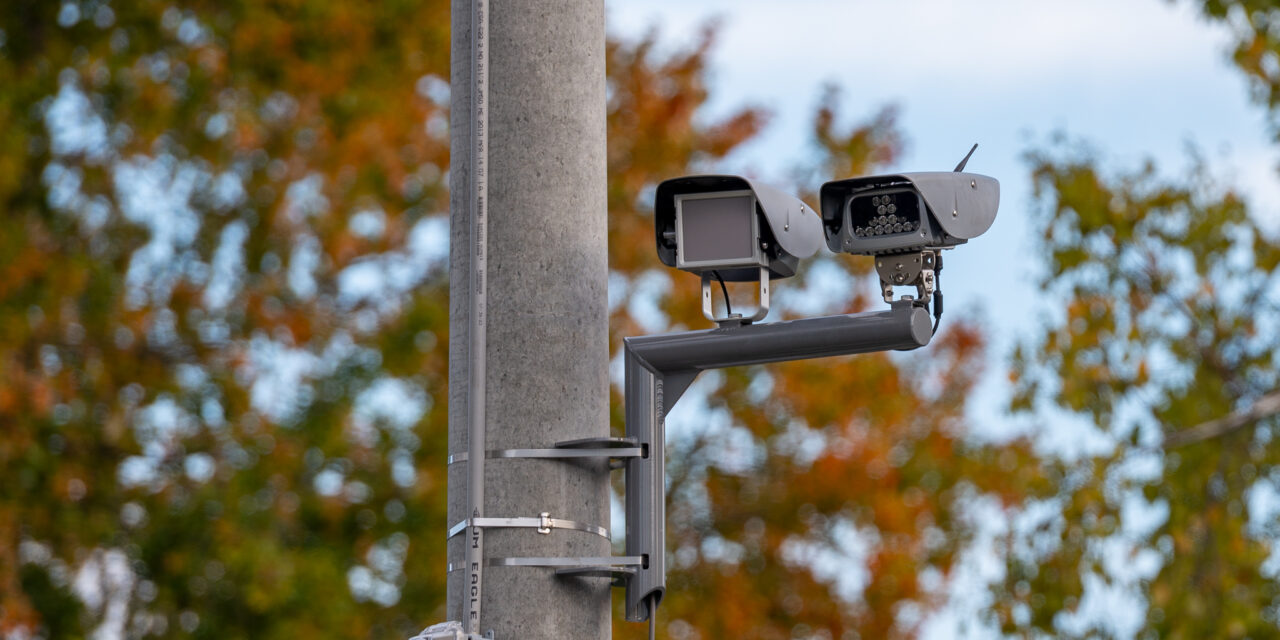
As the Ontario government moves to eliminate speed cameras across the province, mid-year data from Stouffville’s Automated Speed Enforcement (ASE) program show a sharp decline in speeding throughout the Town’s monitored Community Safety Zones.
A report coming to Council on Oct. 15 outlines the program’s performance since its launch on March 17, 2025, noting a 50 to 55 percent reduction in the number of speeding vehicles between March and September.
The March launch included eight camera locations. Four more were added in August, bringing the total to 12 active cameras on local roads. Four additional units are operated by York Region on regional roads within Stouffville, though they are not included in the Town’s data.
“The overall trend shows a consistent decline in the proportion of vehicles exceeding the limit,” the report states. “This suggests that driver behaviour is gradually adjusting in response to ASE enforcement, with fewer vehicles travelling above the posted speed limit over time.”
ASE by the numbers
To date, 40,370 tickets have been mailed out, with a roughly equal number issued for infractions occurring during and outside school hours. The highest recorded speed was 210 km/h in a 40 km/h school zone in June, followed by a 137 km/h infraction in May. The Town did not release per-month ticket counts or categorized speed data for penalized vehicles.
Of those tickets, 3,131 (about 7.5 percent) resulted in appeal requests through the screening process. Just 148 penalty notices (0.37 percent) were further appealed via hearing reviews. As of Sept. 30, 26.6 percent of tickets remained overdue, with unpaid penalties linked to vehicle owners’ plates for collection through the Provincial plate renewal process.
Across all active locations, an average of 703,000 vehicles passed the cameras each month. In March, 85 percent of drivers were travelling at 47 km/h or slower, but by September, that figure had dropped to 41.7 km/h. This 85th percentile metric, which filters out outliers to better represent normal traffic speeds, reflects a sustained decrease in overall speeds during the program’s first six months.
At the eight original camera sites, the number of monthly speeding vehicles fell from roughly 150,000 in the final two weeks of March to 167,000 in all of September. The four new sites activated in August also showed improvement: total speeding vehicles dropped from 182,916 in August to 127,744 in September, a 30 percent decline in two months.
Staff cautioned that while the data remain preliminary, early results are clear: the number of vehicles speeding in the Community Safety Zones has been cut in half.
“Results show a significant reduction in speeding during the first two months after the program went live,” the report states. “Following this initial decrease, vehicle speeds at each location have stabilized at a consistent level, with slight variations between sites. This sustained reduction in speed indicates that ASE is effectively promoting safer driving behaviour…thereby helping to reduce the risk and severity of vehicle and pedestrian collisions.”
$2.19 million in net revenue, $1 million realized
According to the Town’s financial summary, Stouffville’s ASE program has already generated more than enough revenue to cover its costs. From March 17 to Sept. 30, fines issued under the program totaled just over $5.1 million, while expenses amounted to $2.9 million.
The Town’s ASE expenses include:
-
- Processing fees owed to Newmarket: $994,465.43
- Victim fine surcharges, remitted to the Province: $874,164.50
- Plate search fees, remitted to the Province: $389,720.10
- Cameras, equipment, and technology costs: $164,489.27
- Staffing: $438,337.01
- Other operating costs: $52,712.51
- Total Expenses: $2,913,888.81
That leaves a net revenue of $2.19 million. To date, the Town has realized just over $1 million of that revenue, with the remaining $1.18 million in fines outstanding. Many of those unpaid tickets are pending collection through the Ministry of Transportation and the plate renewal process, and Staff noted that collection could be stretched over multiple years.
“Any net revenue generated through the Automated Speed Enforcement (ASE) program will be allocated to road safety initiatives,” they said.
Council awaits Provincial legislation to end program
During its Oct. 1 meeting, Stouffville Council unanimously approved a revised motion from Mayor Iain Lovatt directing Staff to review the ASE program “effective immediately” and prepare for a wind-down in line with the Province’s forthcoming legislative direction.
The motion calls on the Province to provide funding for new traffic calming measures, a commitment Premier Doug Ford has tied to his opposition to ASE. It also directs Staff to report back by the end of 2025 with local implementation options.
Lovatt told Council he expects the Provincial legislation banning ASE to be introduced shortly after the legislature resumes later this month. His original motion proposed setting a firm end date of Dec. 31, 2025, but that clause was removed following objections from Councillors Rick Upton and Sue Sherban.
Sherban said preemptively naming an end date could appear to endorse the Province’s plan to cancel ASE. “It sounds too presumptuous on our part,” she said. “It sounds like we’re setting a date, and I don’t want to even give him a glimmer that I’m setting a date to that, because they might look at that as an acceptance.”
Ward 1 Councillor Hugo Kroon addressed the Province’s stated intent and urged Council to continue advocating for the continuation of ASE.
“Unfortunately, I think the Province has made this decision without actually looking at the facts,” Kroon said. “I was against [ASE] before we started this. But having seen the impact and having seen the benefits in the town, now I fully support this program… It is doing exactly what we said it was going to do: it was going to help slow down traffic and it was going to make the community safer.”
He added that municipalities may not have had sufficient time to report results and demonstrate ASE’s impacts before the Province decided to cancel it.
“I would like to see continued lobbying efforts to the Province to say, ‘Look, we believe, based on this information that you’re getting, that you made a mistake,’” Kroon said. “We need to continue to lobby on behalf of the safety for our communities, and specifically our children and our seniors.”
He acknowledged that “maybe in some municipalities there was a bit of overreach,” referring to jurisdictions issuing far more tickets than Stouffville. However, he suggested the Province should give municipalities “some guardrails and some guidelines as to exactly how [the] program should be working” instead of ending it.
Ontario Mayors Call for Reforms, Not Cancellation
Kroon’s comments were echoed in a joint letter signed by 20 Ontario mayors on Oct. 2 urging Premier Ford to reconsider his plan to eliminate ASE programs. Instead, the group asked him to permit municipalities to continue using the cameras under tighter provincial oversight.
The letter, led by Burlington Mayor Marianne Meed Ward and Brampton Mayor Patrick Brown, proposed reforms such as regulated ticket thresholds, limiting camera use to only school zones and hours, issuing warning tickets to first-time offenders, and adding more prominent signage.
“We know your government has been open in the past to revisiting decisions when presented with sound evidence and public support. We hope that will be the case again,” the letter reads. “Ontario’s municipalities are open to making changes and stand ready to work with you to provide additional modifications to the program to address concerns, while also ensuring our communities have the tools they need to keep people safe.”
In comments to Bullet Point News, Lovatt said he was not asked to sign the letter, adding that if he had been asked, he would have included his name. Two York Region mayors, David West of Richmond Hill and John Taylor of Newmarket, were listed among the signatories.
Ford, and the Town, Stand Firm
In an Oct. 7 response, Premier Ford reaffirmed his intention to end all municipal ASE programs, calling them “cash grabs” that burden drivers without improving safety. “Our government is banning this municipal cash grab once and for all,” he wrote. “The only thing municipal speed cameras are 100 percent effective at is taking money from hard-working people.”
Ford cited provincial data showing ASE fines grew ninefold between 2020 and 2024, from 163,852 to more than 1.3 million tickets, costing drivers roughly $52.5 million. “Clearly, if the point of speed cameras is to slow down drivers, they are failing miserably,” he wrote.
The Premier again commended Vaughan Mayor Steven Del Duca for ending his municipality’s program and noted that Lovatt “pledged to do so.” Stouffville’s resolution last week, however, did not set a wind-down date, instead directing the Town to await Provincial legislation before ending ASE operations. That position aligns with the Staff recommendations contained in the report heading to Council next week.
“The Town is aware that the Province may introduce legislation to cancel the program,” Staff concluded. “However, given the positive results demonstrated to date, Staff recommend that the program continue in its current form until such time as the Province removes the legislative authority to operate it.”