- Invasive species like dog strangling vine are spreading throughout the York Regional Forest.
- To raise awareness, York Region is hosting a free forest walk on Aug. 21 at the Porritt Tract in Stouffville.
- The Nature’s Invaders forest walk will feature expert-led discussions on invasive species, native plant identification, and urban forest stewardship.
- Invasive species specialist and walk leader Dayna Laxton warns that many invasive plants are found in private gardens and can quickly spread.
- LEAF’s Brian Millward stresses the role of residents in managing invasives and supporting urban forest health, even in their own backyards.
- Education and prevention are key, particularly with threats like Oak Wilt and Spotted Lanternfly not yet found in York Region.
- A new online database from York Region helps residents identify, manage, and report problem species.
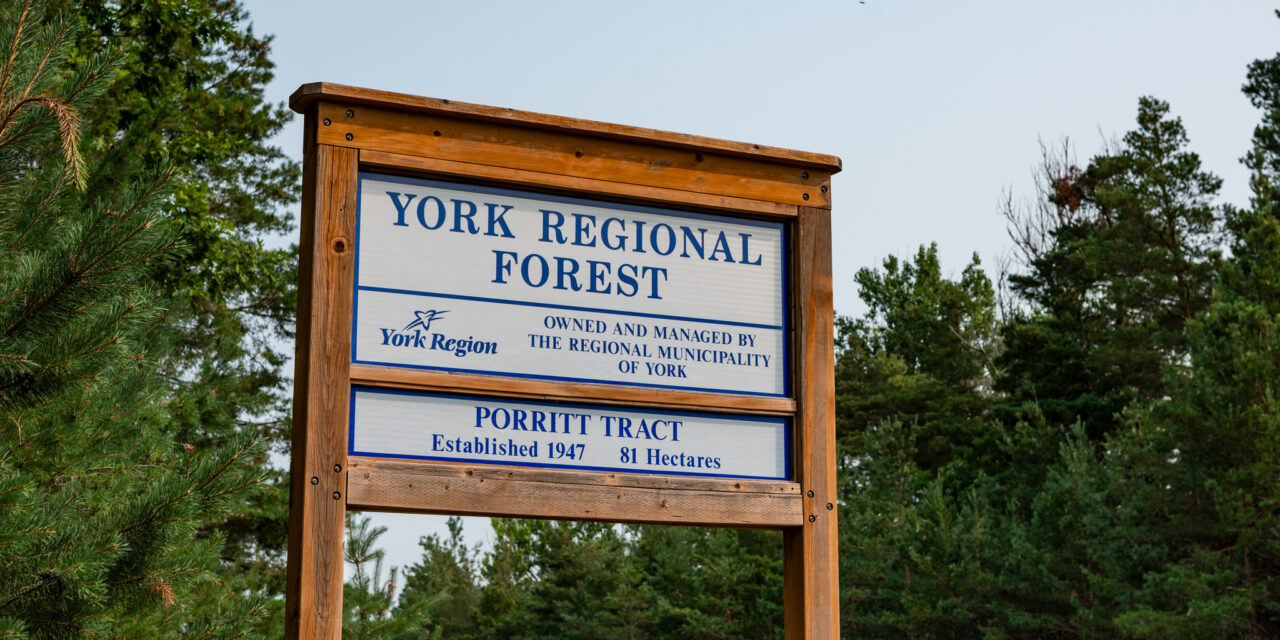
Entering the York Regional Forest’s Porritt Tract, one doesn’t need to walk far before finding an invasive species. Just steps from the Kennedy Road entrance, a growing patch of dog strangling vine is going to seed, pushing ever deeper into the forest.
Dog strangling vine (DSV), the common name for both black swallowwort and pale swallowwort, is native to Eurasia. It was introduced to North America over a century ago as an ornamental garden plant and has since spread rapidly through natural areas and suburban backyards.
According to Ontario’s Ministry of Natural Resources, a single square metre of DSV can produce 2,400 seeds, which form in slender pods and are easily dispersed by wind once the pods split. Like many invasives, DSV quickly dominates large areas when left unmanaged. It is notoriously hard to remove due to a deep, complex root system, and it inhibits forest regeneration by outcompeting native vegetation and tree seedlings.
The plant is also a member of the milkweed family, which can mislead at-risk monarch butterflies into laying their eggs on it. When the caterpillars hatch on what was hoped to be its native host plant, they are unable to eat the leaves and die—putting an early end to the butterfly’s lifecycle and contributing to the species’ ongoing decline.
DSV is just one of many invasive species being monitored by York Region. In an effort to educate residents about the invasive fauna and flora impacting the area, the Region will host a forest walk titled Nature’s Invaders on Thursday, Aug. 21. Registration is now open for the Stouffville event, which is taking place in the Porritt Tract located at 15470 Kennedy Rd.
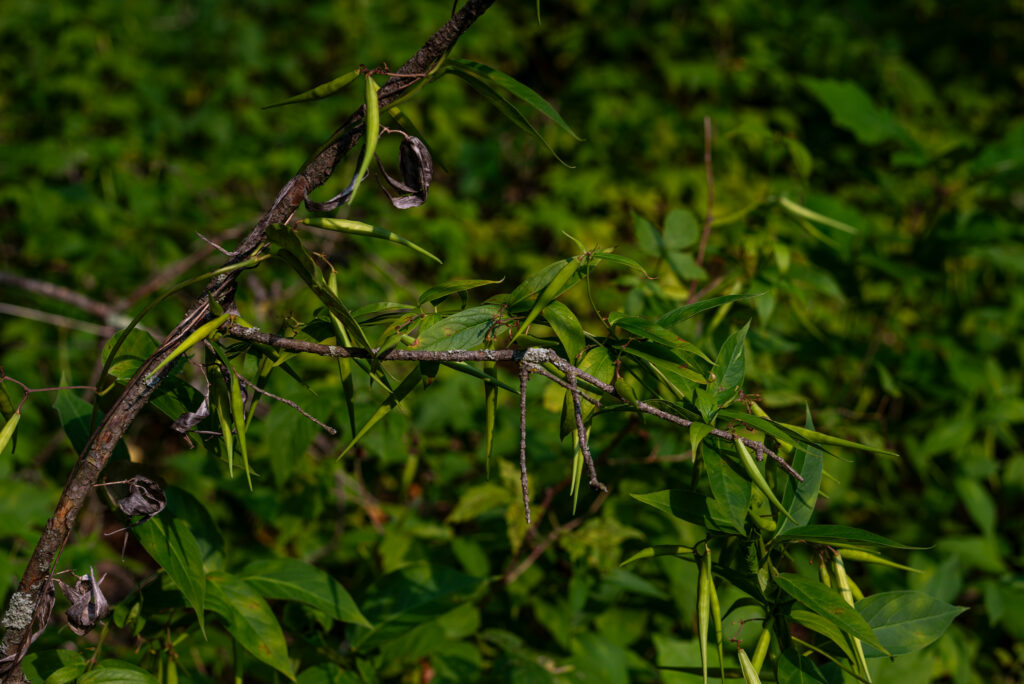
The seed pods of dog strangling vine dry out and split open, releasing seeds that are easily carried by the wind.
Bullet Point News recently spoke with Dayna Laxton, an Invasive Species Specialist with York Region and one of the event’s leaders, about the state of invasives in the Regional Forest. Beyond DSV, Laxton highlighted the presence of other invasive plants such as garlic mustard, buckthorn, periwinkle, lily of the valley, goutweed, and Japanese barberry.
“Many of these species are common garden plants, and they spread by wind, by wild and domestic animals, and when people dump their yard waste in natural spaces,” Laxton explained. Additionally, invasive plants are often left unchecked in backyards, allowing them to cross property lines and take hold in natural environments like the Regional Forest.
“The key with invasive species is to learn what they look like, see if you have them on your property or in your garden, and control or remove them as best you can to prevent their spread into your neighbor’s property or a natural space,” she said. “It comes down to understanding what the bad guys are, then encouraging or promoting people to plant native species that will benefit our wildlife.”
To support residents in identifying and managing invasives, York Region has developed an online database with extensive information, including photographs and relevant links to the Invasive Species Centre. It covers not just invasive plants, but also insects, animals, and fungal diseases. Residents can use both sites to identify, control, and even eradicate invasive species on their own properties.
“We really need to prioritize not introducing invasives to new areas,” Laxton said. “That’s why education and outreach, and doing walks like the one we’ll be doing at Porritt, is so important. The more people are educated and aware, the more we can all contribute to addressing the issue.”
This becomes even more urgent with threats not yet established in York Region. While many residents are familiar with the Emerald Ash Borer, which devastated local ash populations over the past two decades, Laxton and the Region are now sounding the alarm about emerging threats like Spotted Lanternfly, Hemlock Woolly Adelgid, and Oak Wilt fungus.
“Emerald Ash Borer showed us that the number one method of spread was moving firewood,” Laxton said, urging residents to keep firewood local. She noted that Hemlock Woolly Adelgid, Spotted Lanternfly, and Oak Wilt could all be transported the same way. Any suspected sightings in York Region should be reported to the Canadian Food Inspection Agency.
Joining Laxton for the forest walk will be Brian Millward, Community Programs Manager at LEAF (Local Enhancement and Appreciation of Forests). He’ll speak about urban forestry and native plant identification but is equally concerned about invasive species’ impacts on forest and ecosystem health.
“LEAF engages citizens in stewardship through plantings, education, and training because we envision healthy, vibrant communities where everyone gets to benefit from a healthy urban forest,” Millward said in an interview. “And of course, invasive species pose a threat to the resiliency of our urban forest ecosystems.”
Urban forestry and invasive species management are intrinsically linked, Millward added. LEAF’s programs aim to educate individuals and provide tools to identify and manage invasives not just in LEAF-planted areas but across communities and private properties.
“People oftentimes don’t realize just how successful humans have been at shifting natural landscapes by transporting, sometimes knowingly and sometimes very unknowingly, invasive plant species,” he said. “We always encourage people to plant native, but we also want people to check their bicycles, their shoes, their vehicles, their pets, etc., after spending time in naturalized areas.”
“People need to ask themselves: am I tracking seeds from one place to the next?” he added. “Because you may be unknowingly moving invasive plant material across the province, or even across the country.”
Like Laxton, Millard hopes events like Nature’s Invaders will encourage residents to not just learn more about invasives, but take proactive steps wherever they can.
“It is important to let people know that if they are managing invasives in their own backyard, if they are being proactive and promoting native species, then they are doing their part—and it is significant,” he said.
“Even if you’re just thinking, ‘oh, it’s just my little garden bed, invasives aren’t a big deal,’ keep in mind that garden bed is part of our urban forest ecosystem,” Millward concluded. “It’s all interconnected.”