- Ontario’s teachers remain without new contracts, with several unions preparing strike votes in November.
- Education Minister and Markham-Stouffville MPP Paul Calandra says the government remains committed to keeping students in class and is optimistic an agreement can eventually be reached.
- Calandra says parents should expect stability for the next several months and stresses that a strike vote does not automatically mean a strike will occur.
- ETFO President David Mastin says reducing class sizes in Grades 4 to 8 is a top priority, noting some classrooms have more than 35 students and no class size caps.
- Mastin says teachers also want more educational assistants, psychologists, and child and youth workers, while maintaining the union will do everything possible to avoid a strike.
Ontario’s teachers remain without new contracts and several unions are preparing strike votes in November, raising concerns among parents about the possibility of labour disruptions later this school year.
While bargaining remains stalled amid matters before the Ontario Labour Relations Board, both the provincial government and teachers’ unions insist they want students to remain in class, even as they disagree sharply on the challenges facing Ontario’s schools.
Education Minister and Markham-Stouffville MPP Paul Calandra says the government’s goal is to work with unions toward a new agreement.
“We have the same goals. We want to keep kids in school. And, you know, understanding that these are challenging times, especially with everything that we’re facing from our friends down south, but if we work closely, I’m sure that we can come to an agreement.”
Calandra acknowledged parents are watching developments closely and said strike votes should not be interpreted as an immediate threat to the school year.
“I’d say, look, to the best of that I can, there’s going to be stability for a number of months ahead of us still. I know it’s always very challenging and you know, there’s some strike votes coming in November. But that does not necessarily mean that there will be a strike right away.”
The minister said both the government and unions ultimately share the same objective.
“Both the government and I think teachers unions as well. We are firmly committed despite the noise that comes out of negotiations. Both sides are firmly committed to keeping kids in school, getting a fair deal for teachers, and a fair deal for students and parents at the same time.”
But the Elementary Teachers’ Federation of Ontario says significant issues remain unresolved.
ETFO President David Mastin says class sizes, particularly in Grades 4 to 8, continue to be a major concern for teachers across the province.
“One of the biggest issues that we’ve got that our members have continually highlighted year after year after year, but actually really emphasized this year is the issue of class size in grades 4 to 8.”
Mastin argues the problem is compounded by a lack of support staff in schools.
“We have no caps. We have classrooms in some cases of 35 students, 13 and 14 years old, that are complex and complex needs that these kids have today.”
He said teachers would benefit from additional educational assistants, psychologists, psychometrists and child and youth workers, adding that support services have not kept pace with student needs.
Despite the planned strike votes, Mastin said the union does not want a labour dispute and recognizes the anxiety parents are feeling.
“We are gonna do everything in our power to avoid that. And I can’t say that strongly enough.”
At the same time, Mastin accused the provincial government of underfunding public education and warned that teachers will continue pushing for greater investment in classrooms and student supports.
For now, both sides say they hope a deal can be reached without disruptions. But with teachers still without contracts and strike votes looming, tensions in Ontario’s education sector are likely to remain in the spotlight throughout the fall.
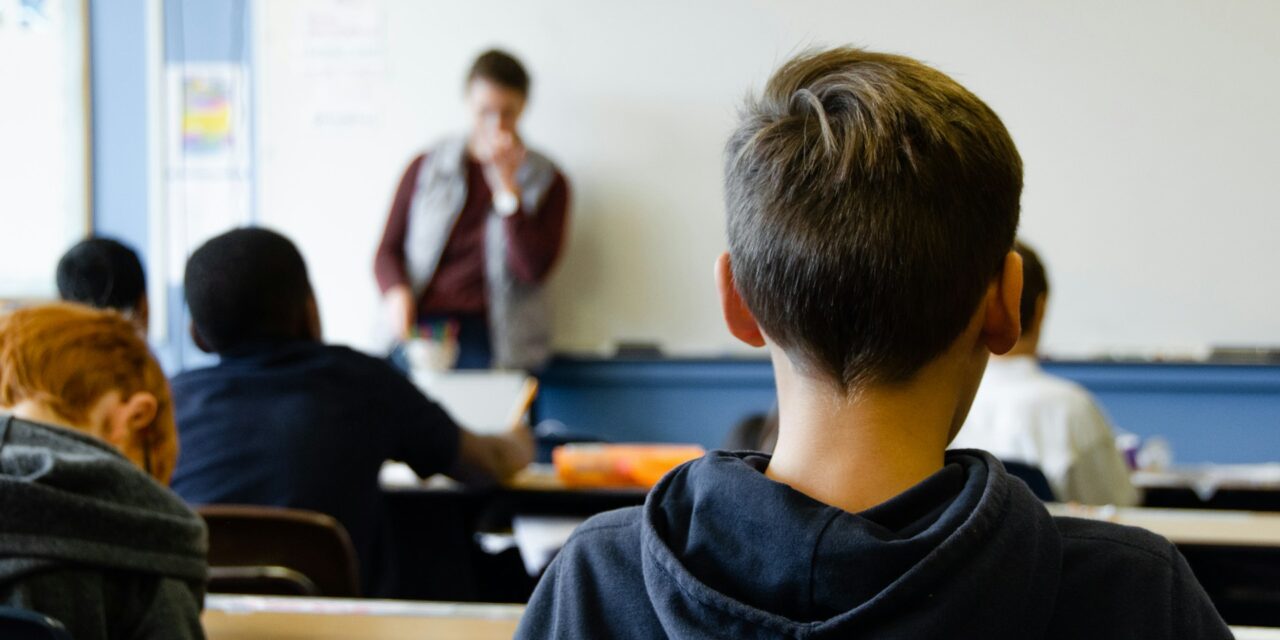
Cover image taken by Taylor Flowe