- Stouffville will introduce permanent traffic calming measures following the Province’s decision to ban automated speed enforcement programs.
- The Town received nearly $470,000 through the Road Safety Initiatives Fund to support alternative tools in former ASE zones.
- Council approved the purchase of 12 radar speed display signs that both alert drivers and collect traffic data.
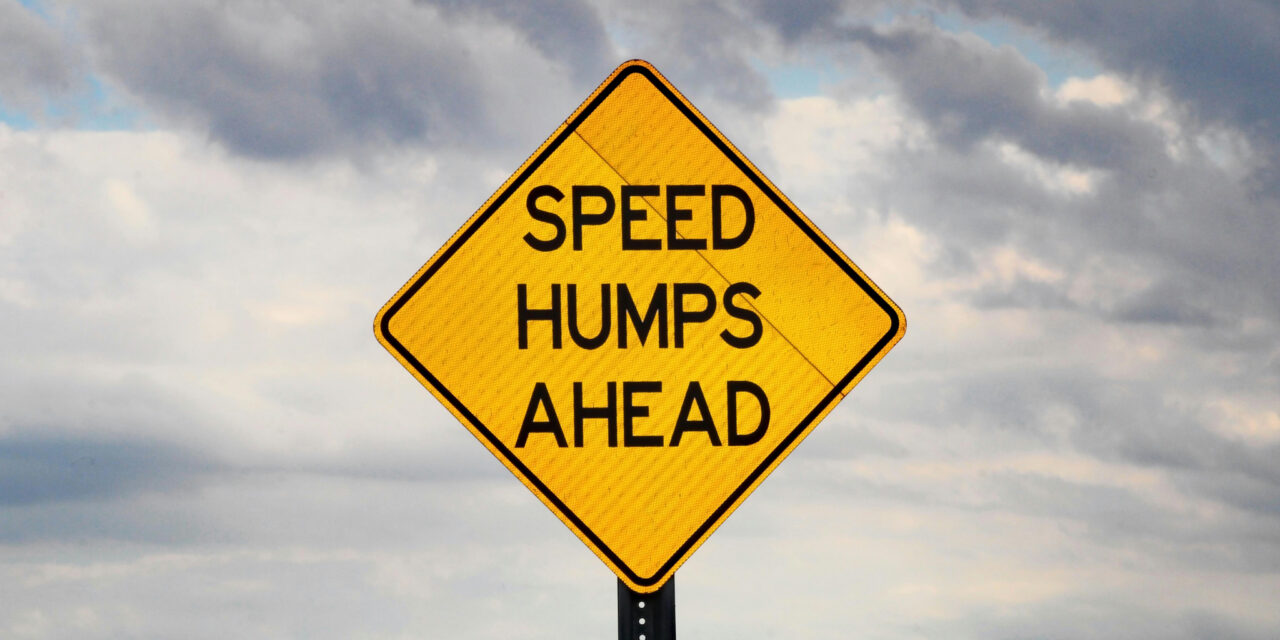
- Staff recommend replacing all of the Town’s temporary rubber speed bumps with permanent asphalt speed humps.
- Installation is expected to begin in the fall.
- Council also discussed using collected speed data to advocate for the return of municipal speed camera programs.
Stouffville is preparing to install permanent traffic calming infrastructure across several neighbourhood streets following the Province’s decision to end municipal automated speed enforcement (ASE) programs.
The Town’s ASE cameras were turned off on Nov. 13, 2025, after the Ontario government banned the systems provincewide. To offset the loss of enforcement tools, municipalities with active programs were offered funding for alternative traffic calming and road safety measures.
Through the Province’s Road Safety Initiatives Fund (RSIF), Stouffville has received nearly $470,000 to support new traffic calming measures. New signage for school zones has also been provided. However, a recent Staff report notes the funding can only be used “for the implementation of traffic calming measures where ASE cameras were previously operational.”
Council approved the procurement of 12 radar-based signs for former ASE areas using RSIF funding during their Mar. 11 meeting. The devices monitor the speed of passing vehicles and display it to motorists in real time. Staff say the signs provide “immediate speed-compliance improvement through driver awareness” while also collecting data on traffic speeds and volumes.
That data will be analyzed over the next six to 12 months to help determine where additional traffic calming measures may be warranted. Commissioner of Engineering and Public Works Jack Graziosi said the data could also support an application for a second round of RSIF funding to help fund further safety infrastructure.
Town Staff say the end of ASE enforcement requires a greater reliance on physical infrastructure to influence driver behaviour. “The conclusion of the ASE program requires the Town to rely on permanent, self-enforcing physical treatments to maintain driver compliance,” their report states.
Stouffville currently installs temporary rubber speed bumps and lane delineators during warmer months to slow traffic, but the devices must be removed each winter to accommodate snow clearing.
To strengthen long-term road safety and avoid the seasonal cycle of installation and removal, Staff recommended replacing 23 temporary speed bumps at 13 locations with permanent asphalt speed humps.
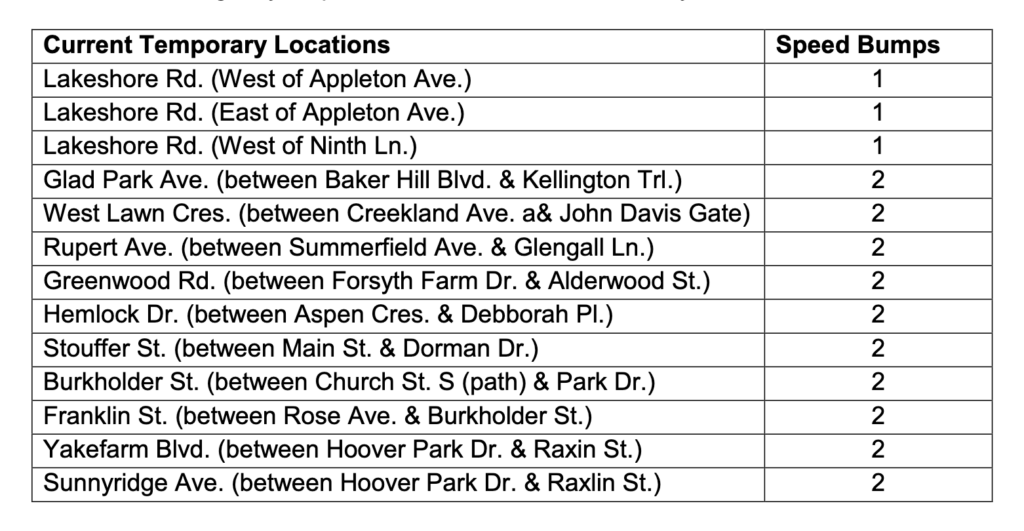
A table from Stouffville Report No. EPW-006-26 showing current temporary speed bumb locations.
Speed humps are similar in height to the existing rubber bumps but are wider and designed with a more gradual transition. While the report acknowledges they could increase emergency response times, Staff say they require less maintenance and should not significantly affect winter road operations.
Town Staff initially explored the use of speed cushions, which involve spaced humps to allow vehicles with wider wheel bases, such as buses and emergency vehicles, to pass through with less disruption.
However, Graziosi said the cushions would likely be less effective in Stouffville. “We’re finding that many vehicles that are owned by our residents, such as pickup trucks or larger SUVs, have a similar wheelbase and/or width, so the devices will not be as effective as originally considered,” he told Council.
The Town will continue developing traffic calming plans through the summer, with installation of permanent speed humps expected to begin in the fall.
Additional measures may also be installed where funding allows. Priority will be given to school zones previously monitored by ASE cameras, high-volume roads experiencing ongoing speeding concerns, and locations identified through traffic studies or resident requests.
During Council’s deliberations on Wednesday, Councillor Hugo Kroon asked about the data collection capabilities of the radar-based speed signs. Beyond informing future traffic calming decisions, he questioned whether the information could also support advocacy efforts with the Ontario government following its decision to end municipal ASE programs.
“Are we going to be sharing that data with the Province to tell them again…that you took away our speed cameras and have endangered our residents?” Kroon asked. He suggested compiling radar data from Stouffville and other municipalities to strengthen calls for legislation allowing the return of ASE.
Kroon also asked Staff to consider deploying more of the Town’s existing radar speed display signs in rural areas, noting the new RSIF-funded devices will primarily serve urban neighbourhoods where ASE cameras previously operated.
Councillor Sue Sherban joined others in referencing longstanding concerns from Stouffville’s Fire and Emergency Services about potential impacts on response times, which had prevented the installation of speed humps.
Sherban thanked Staff for bringing forward the recommendation, saying she was glad a middle ground had been reached, and noted requests for permanent speed humps have been raised repeatedly since she first joined Council in 1997.
“We’ve lost the cameras…the only natural next step is to put the speed humps in, permanent speed humps, which will make Stouffville a safer place,” Councillor Rick Upton commented. “I just can’t emphasize that enough.”
Cover image taken by Michael Anthon