- Council will decide Oct. 1 on whether to establish a centralized garbage drop-off site for Downtown Main Street businesses.
- Staff recommend ending municipal collection for businesses, requiring them to arrange private services.
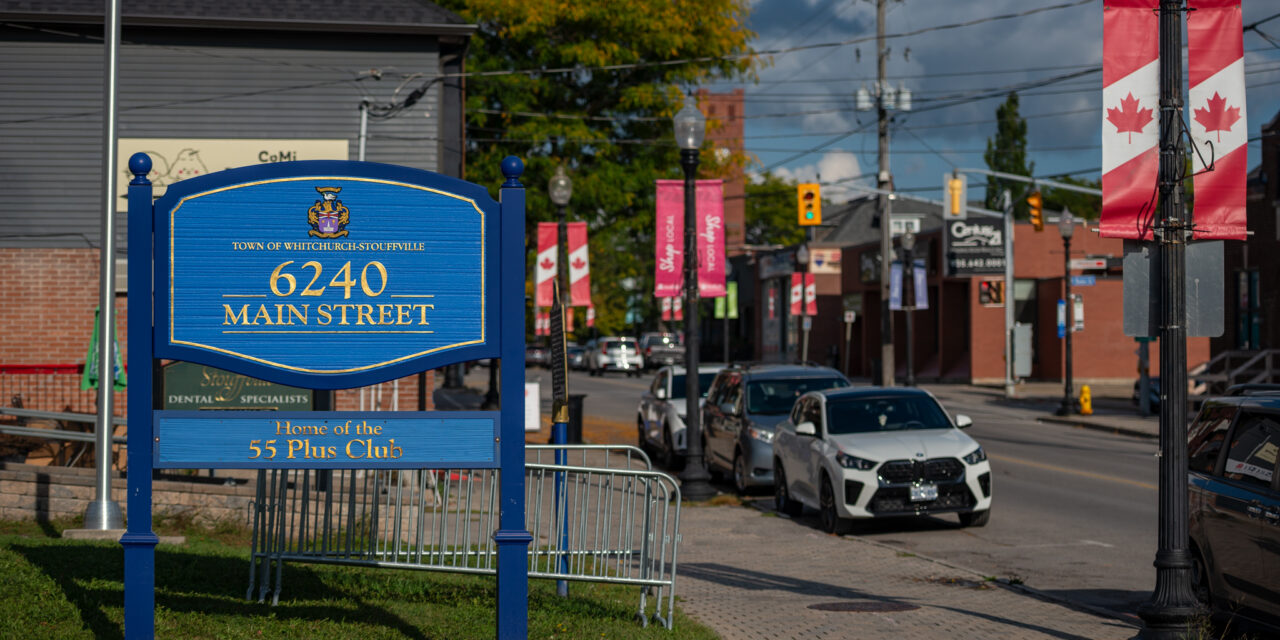
- Proposed underground bins at the rear of 6240 Main St. would remove 8–12 parking spaces.
- Installation is estimated at $30,000–$40,000, with annual operating costs of $5,500–$6,700 per bin.
- Expenses would be covered through the Downtown Special Tax Levy, raising fairness concerns from Councillor Sue Sherban.
- If approved, bins would need to be installed by Dec. 31, 2025, with curbside pickup ending Feb. 1, 2026.
Council will soon decide on whether to establish a shared garbage drop-off site at 6240 Main St. for Downtown businesses. The move would affect about 100 businesses between Albert Street and Park Drive, which are slated to lose twice-weekly curbside collection in 2026.
Town Staff are advising against the option, echoing their original position when the debate began earlier this year. They cite costs, parking losses, and the likelihood of illegal dumping, recommending instead that business owners arrange their own private waste collection services.
On Feb. 5, Council voted to end municipal collection of recycling, garbage, and green bin material for all industrial, commercial, and institutional (ICI) properties effective Dec. 31, 2025. The change brings the Town’s services in line with the new Provincial Blue Box program, which maintains residential collection but excludes businesses. However, Staff were directed to explore alternative waste options specifically for Downtown Main Street businesses.
A follow-up motion in June asked for a detailed plan and cost breakdown for a possible centralized garbage drop-off facility. That report concludes that continuing Town-managed collection for Downtown businesses would pose challenges.
Staff assessed 6240 Main St. as a feasible location. The lot currently serves the 55+ Club, the Stouffville Market, and monthly parking permit holders. Installing underground bins at the rear of the site would eliminate 8–12 parking spaces, with the potential for more parking reductions if additional bins were needed in the future.
Businesses would be responsible for transporting their waste to the site, where each in-ground bin would be locked and accessible only by key to prevent misuse. The bins, similar to those at the Leisure Centre and Ballantrae Community Centre, are designed to reduce odours and be more visually discreet than traditional dumpsters.
Despite those advantages, the report flags several risks. Illegal dumping is already common along Main Street, with household waste, electronics, and hazardous items frequently left in or around public bins. Security cameras and regular monitoring would be needed at the new site, and the Town would be responsible for clearing improperly discarded material—adding to costs and labour demands.
Installing two bins is estimated to cost $30,000 to $40,000, depending on size and vendor. Approximate operating costs to empty each underground bin once a week would range from $5,500 to $6,700 annually. Actual costs could rise if more frequent collection or additional bins are needed, and the Town would need to obtain permits from the Toronto Region Conservation Authority.
“Until the bins are in use, it is difficult to determine how many collections per week would be necessary,” Staff wrote. “This would be a separate contract from the Town’s current Municipal Waste Collection contract, as this area is considered to be a non-eligible source.”
The report also notes that standard bins like dumpsters could be used instead of underground units, which would eliminate installation costs. However, those containers would be “unsightly and are more likely to attract animals.”
Staff have indicated that all capital and operating costs for the drop-off site would be recovered through the Special Tax Levy for Downtown properties. The levy currently totals $76,000 per year, but the report cautions that waste-related expenses would push it higher beginning in 2026.
Another complication is that the levy is paid by property owners, not necessarily the businesses producing the garbage. Costs would also be applied equally through the levy, regardless of how much waste each business generates.
“Finding a fair and equitable solution for the Downtown under the new Provincial legislation has been challenging,” Ward 6 Councillor Sue Sherban said in a recent letter to the Village of Stouffville Advisory Committee. “However, due to the diversity of businesses—ranging from professional offices to restaurants and retailers—no single solution has proven to be fair or feasible for all.”
“Under Council’s direction…I believe Public Works has provided a thorough and thoughtful set of options, including cost analyses and location assessments,” Sherban added, telling recipients that she would be supporting Staff’s recommendation.
Should Council vote to pursue the centralized option during their Oct. 1 meeting, bins would need to be installed before Dec. 31, 2025. Curbside collection would then officially end on Feb. 1, 2026, giving Downtown businesses time to adjust.