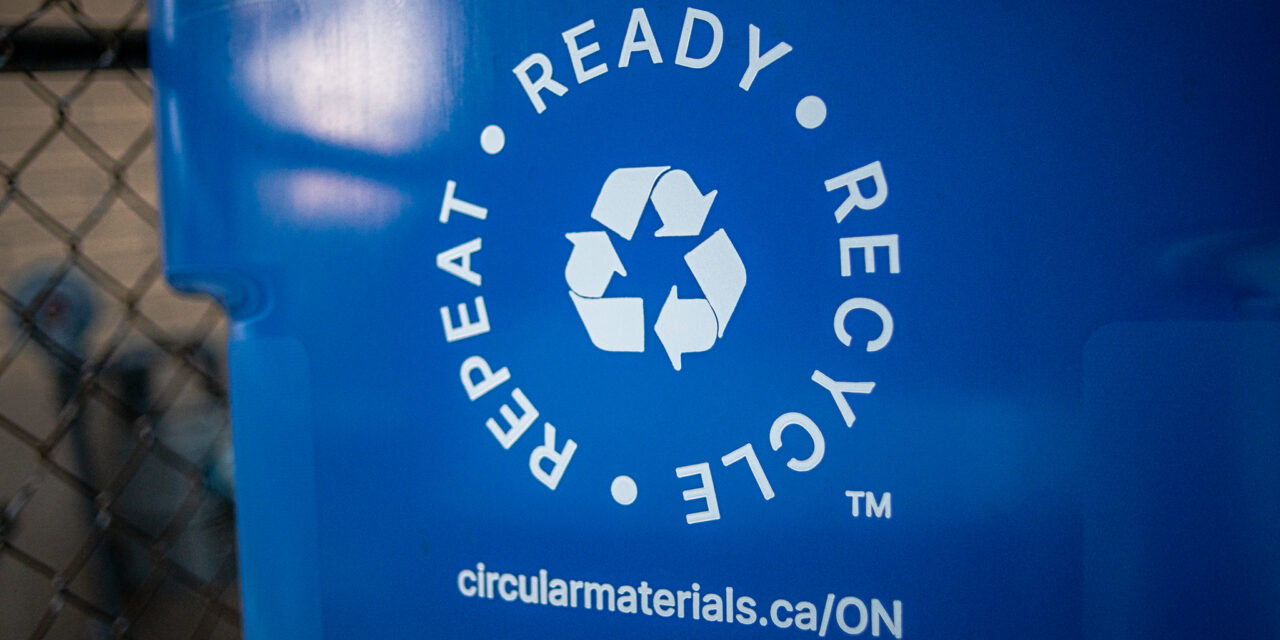
- Six northern York Region municipalities will transition to bi-weekly recycling collection with 95- and 65-gallon carts next year.
- Waste experts warn that reduced service frequency may affect participation and overall diversion rates.
- Increases in contamination and the potential for more recyclables entering municipal garbage streams is another concern.
- Producers of blue bin materials will be financially and operationally responsible for recycling, intended to incentivize improved circular systems.
- Experts worry that early compromises in performance targets and material exemptions will limit short-term program performance.
- Predictable material flows could help establish new uses and markets for recycled commodities.
- Processing technology improvements could enhance output material quality amidst early challenges.
“York Region has been number one in waste diversion by large municipalities for the past 13 years because the program is convenient, which drives diversion,” York Region Director of Waste Management and Forestry Services Lindsay Milne said in a recent exchange with Bullet Point News.
The Region currently processes recycling from its lower-tier municipalities, which maintain their own collection contracts. It covers roughly half the processing costs, with the remainder paid by those towns and cities.
That is set to change in 2026. Under Ontario’s new Blue Box Regulation, an Extended Producer Responsibility (EPR) recycling model will be implemented across the province.
“EPR makes companies who design and sell products and packaging responsible for end-of-life management of the goods and packaging they produce,” Milne said. “When implemented effectively, EPR can drive innovative solutions that minimize the use of natural resources, extend product life cycles, and encourage packaging redesign to reduce volume and make items easier to recycle.”
The rollout has been particularly challenging for six northern York Region municipalities, known as the N6, where residents are facing controversial changes to recycling collection. Beginning in January, a new collection contract will see local households move to bi-weekly mechanical collection using 95-gallon carts.
After vehement public opposition, local mayors successfully pushed for a 65-gallon option, which residents can request online for delivery early next year.
Circular Materials is reminding residents that all recyclables must be placed inside the carts due to the automated collection system. Those choosing the smaller option will be limited to one cart and are advised to try the larger bin for at least three collection cycles before requesting a switch.
The Potential Impacts of Bi-Weekly Collection
Milne said the Region will “closely monitor” the N6 transition and echoed concerns from local mayors: “These amendments could cause less material than expected being recycled and see designated products and packaging leak into the garbage or other waste streams.”
Such outcomes could increase municipal costs, as towns and cities remain responsible for garbage and green bin programs, and could undermine York Region’s diversion record. To track impacts, the Region plans waste composition studies to measure how much blue bin material ends up in other streams. The studies will “help compare results of the new program against historical performance prior to the transition to EPR,” Milne said.
“To date, success in diversion has been based on high service levels to our residents, including convenient, weekly service,” she explained. “The shift from once per week collection to every two weeks is concerning, as it could result in residents placing more recyclables in the garbage if their bins are full and pickup is less frequent.”
Even after the change, York Region will “continue to advocate for proper recycling practices, recognizing its strong benefits and environmental outcomes,” she told us.
Can Efficiencies Be Justified?
Stouffville Public Works Commissioner Jack Graziosi offered a similar assessment. “If there was a desire to promote recycling, the service that would better align with that would be a weekly collection service,” he said.
He noted the current system provides both incentives and disincentives: residents have convenient collection for recyclables and organics, while limits on garbage discourage excess and unnecessary waste destined for landfill or incineration.
“It encourages residents to sort their garbage and put things into the appropriate streams,” Graziosi said.
However, collection remains one of the most expensive components of the system due to equipment, fuel, and labour costs. That raises a basic question: can the same amount of recycling be collected more efficiently with fewer stops, and can increased household storage justify bi-weekly service?
Residents will not produce more or less material based on collection frequency, Graziosi said. For households able to accommodate the larger carts, Circular Materials could reduce costs without affecting participation.
Recycling Contamination vs. Garbage Switching
York University’s Dr. Cal Lakhan said contamination in N6 blue bins is likely the bigger concern under the new system. A researcher, environmental studies professor, and project director at the university’s Circular Innovation Hub, he has studied recycling efficiencies and waste diversion for years.
Lakhan pointed to Toronto’s 2005 and Peel’s 2006 transitions from weekly dual-stream collection, which saw paper products separated into their own grey bin, to a combined stream with large bins and bi-weekly pickup.
An assessment of program results found an increase in recycling participation thanks to the added convenience. However, it also resulted in increased non-eligible material entering the recycling system. Lakhan said the new carts and reduced collection frequency could produce similar results in the N6.
“People can put things that don’t belong in the recycling cart because of its opaque nature. It’s large, it’s closed, meaning there is a higher probability of illegal dumping,” he explained. “Sometimes you do see what we call garbage switching, where people dispose of recycling in the trash because weekly collection was easier, though to a smaller degree.”
Contamination has downstream effects throughout the recycling process. It raises sorting costs, diverts a greater share of collected material to landfill and incineration, and results in lower-quality processed commodities for market and eventual reuse.
While municipal taxpayers will no longer cover these costs under EPR, Producer Responsibility Organizations (PROs) like Circular Materials will. Rising system costs could become a barrier to expanding service levels and adding new eligible sources and materials to the program. It also intensifies pressure on PROs to reduce collection expenses and other costs.
“Ultimately, when they bail these materials, the presence of contamination results in a lower grade, and therefore it commands a lower price,” Lakhan said. “Some of the materials are just thrown out, and a lot of the materials are now of a much lower quality, meaning they can’t maximize its revenue.”
“These are now costs that are borne by producers under the new EPR model,” he continued, referencing the potential for price increases on products utilizing recyclable packaging. “Whenever you see a rise in system costs, they can always be downloaded onto the consumer.”
Lakhan also said that over the past two decades, cost increases from such transitions have slightly outweighed gains from higher participation. He worries the additional blue bin items promised by Circular Materials, particularly black plastics and toothpaste and deodorant tubes, will worsen contamination: “None of those can actually be recycled.”
“They are going to radically increase contamination and the cost of recycling,” Lakhan warned. While he understands the desire to capture more materials, he fears the transition could prompt a rise in “wish-cycling,” where residents place items in the bin believing, or hoping, they are recyclable.
“Just because you put it in the bin doesn’t mean that it gets recycled, and for me that’s the biggest risk of this transition,” he concluded. “They’re adding materials that we know can’t be recycled in our existing infrastructure, which is subsequently going to lead to rising costs, deteriorating performance, and increased consumer expense.”
Flagging Risks, Identifying Opportunities
Peter Hargreave, a waste and recycling consultant with more than two decades of experience in the sector, has worked in both the public and private spheres to advance recycling programs. In recent years, he has helped guide governments through the rollout of EPR policies.
He advises the Regional Public Works Commissioners of Ontario as they make the transition. His work centres on helping York Region and other large municipalities navigate the operational and financial shifts created by moving recycling responsibilities from taxpayers to producers.
Hargreave recognized concerns about the use of large recycling bins, particularly for residents who struggle to physically manage them. However, he said he is not aware of any clear evidence showing that a lack of bin-size options results in reduced recycling rates.
“Two key factors in recycling program performance are access and convenience, and they have a big impact,” Hargreave said, echoing Milne. “There is a level of logic you can apply regarding both container size and service frequency, but I’m not aware of any data in Ontario showing bi-weekly servicing recycles less than weekly, either.”
Under EPR, producers of packaging and other recyclable materials must meet government-established targets. Those companies organize through a PRO, which is responsible for putting the collection and processing systems in place to achieve those targets.
The intent is to make producers both operationally and financially accountable for managing the end-of-life impacts of the materials they supply into the market.
The regulation was designed as an outcomes-based system with targets intended to drive improvements in recycling performance. However, Hargreave said lobbying by producers resulted in exemptions for certain materials, along with reduced and delayed targets. With lower outcomes to meet, he said, PRO’s can pursue efficiencies that ultimately drive down costs for the producers they represent.
“Will the PRO make decisions on behalf of recycling success, or just driving down costs?” Hargreave asked rhetorically. “Why would a producer spend more money trying to recycle more materials if they didn’t need to?”
Milne included similar concerns in her comments, and producer successes in cutting performance targets were noted in the presentation of York Region’s SM4RT Waste Management Plan.
“Numerous amendments to EPR regulations have reduced and delayed performance targets and deferred expanding the program to any newly built multi-residential buildings, schools, and non-profit long-term care facilities until 2031,” she explained. “[EPR] systems require…high performance targets to ensure producers are incentivized to collect and recycle their designated products and packaging.”
On the risk of increased contamination under the new collection program, Hargreave acknowledged that it could introduce added costs. However, he says advancing technology within processing facilities is already alleviating that concern.
“If it costs more to separate materials, and PROs aren’t generating decent bales for market, they won’t be driving value,” he said. “But the technology is improving by leaps and bounds.”
As a policy model, EPR is designed to both improve and grow the marketplace for recycled commodities. A stable supply of material can encourage PROs to invest in better processing technology, especially when it leads to higher-value end products they can sell.
“There is certainly a chicken and the egg situation here, as we hope these programs take recycled materials and actually drive end markets,” he said. It’s a result that could address Lakhan’s concerns about hard-to-recycle items like toothpaste and deodorant tubes.
Hargreave noted that Circular Materials will operate a “robust” audit system expected to provide the data needed to refine and improve the program over time. As targets become more accurate and material flows more predictable, he hopes manufacturers will introduce new uses and innovations for them.
“You can’t really develop end markets until you have an amount of material that people can depend on coming through the system,” Hargreave explained. “And I think what you’re seeing right now is a focused push to make sure these materials are being captured through accurate targets.”
“There are going to be issues that will need to be worked out, this isn’t going to be perfect. But there are significant expenditures happening, and impressive facilities being built, to sort these materials,” he added. “I would expect the quality of end-product recycled materials to continue to improve.”
In the long term, Hargreave said he is confident the program can succeed, though he remains concerned about regulatory compromises like reductions to targets and limits on eligible sources.
“The Ontario government has unfortunately continued to kowtow to special interests, and they aren’t the first government to do that,” he said at the end of the interview. “But if they can hold the line here and improve the regulations in the years ahead, the residential recycling system will also continue to improve.”