- Council has approved standardized timelines for responding to and resolving bylaw complaints.
- The new service levels aim to improve transparency and manage public expectations, while accounting for departmental pressures.
- Initial response times range from 24 hours to seven days, depending on the nature of the complaint.
- Where follow-up is required, resolution timelines span from 24 hours to as long as 75 days for complex cases.
- Stouffville’s Municipal Law Enforcement Division handled nearly 2,000 calls for action in 2024.
- Approximately 80 percent of enforcement activity is complaint-driven; the remaining 20 percent is proactive.
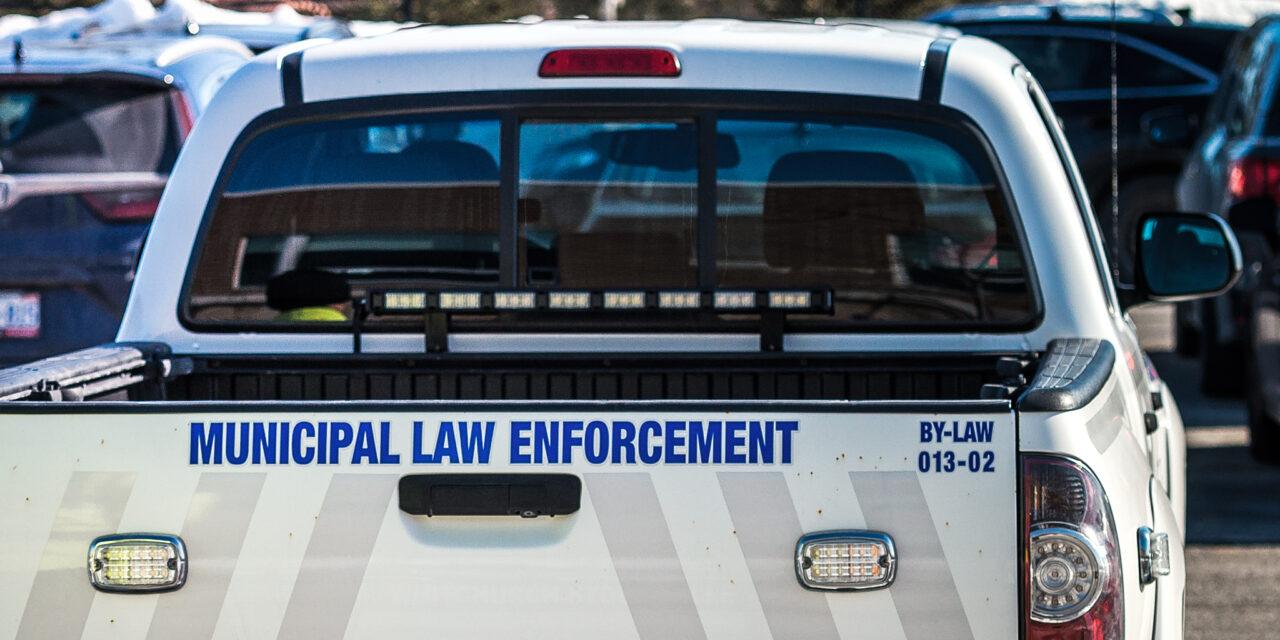
Following Council approval in June, Stouffville’s Corporate Services Commission has formalized the Municipal Law Enforcement Division’s (MLED) levels of service. The department’s new framework outlines target timelines for initial complaint response and resolution, helping to provide residents with a clearer understanding of when the Town will act on and fully address by-law infractions.
MLED is responsible for enforcing a broad range of local by-laws, including those related to property standards, noise, animals, parking, signage, zoning, and site alterations. Officers carry out both complaint-driven and proactive enforcement to maintain community standards and uphold public safety.
For matters such as no heat in an apartment, unsafe pools, icy sidewalks, excessive curbside garbage, and illegal road occupancies, Municipal Law Enforcement Officers will respond within 24 hours. Animal Services Officers are expected to meet the same response window for sick, injured, orphaned, or trapped (SIOT) animals, animals at large, deceased domestic animals, and bite or attack incidents involving people or pets.
All other animal-related complaints are to be addressed within three days. For by-law issues involving zoning or site plans, officers will respond within seven days. Any other general by-law concerns are to receive an initial response within five days.
Parking complaint timelines vary by category. General parking concerns will be addressed within two days, winter overnight parking within three, and weekend-specific issues within five. These standards apply to resident-submitted complaints and do not reflect daily proactive patrols conducted by officers.
If follow-up action is required, complaint resolution timelines have been standardized, with flexibility built in for more complex cases. Urgent issues such as heating complaints, sidewalk clearing, excessive garbage, and unsafe pool enclosures should be addressed within three days.
Otherwise, most general by-law matters are expected to be resolved within 30 days. Parking violations share that same timeframe, and noise complaints should be addressed within 60 days. Complex enforcement actions, as well as zoning or site alteration cases, may take up to 75 days.
Animal-related files also follow specific closure timelines. Deceased domestic animals will be removed within 24 hours. More complex matters, including dog attacks and serious SOIT cases, may take up to 60 days. All other animal-related complaints are expected to be closed within 30 days.
“Unresolved matters may require extended timelines, particularly in complex cases such as detailed investigations into animal concerns,” a related Staff report states. “These cases often involve extensive investigation and documentation, especially when preparing a file for potential court proceedings.”
Town Staff noted that the service targets are intended to ensure expectations remain “achievable and reasonable” given the division’s available resources. Council’s endorsement “not only shows support of the difficult job that the MLED provides to the residents of Stouffville, but will also help to manage everyone’s expectations when requested enforcement action is received,” the report adds.
“By-law is touched by all residents, almost daily. In most cases, they believe that their problems should be solved immediately. Which we know is unrealistic and impossible, but without any service guidelines they can make up their own guidelines,” Councillor Rick Upton said during Council’s June 18 meeting.
“I trust that this has been well discussed within the department, and all concerned will adhere to it, because the worst thing is to set standards and not have the whole team onboard,” he added.
MLED’s workload has expanded alongside the community’s growth. In 2024 alone, the division received and responded to nearly 2,000 calls for action. The types of cases officers encounter are also becoming more complex, the report explains, as they may need to navigate past legal history, site plan amendments, Superior Court matters, or minor variances. Those factors can extend the time needed to fully resolve a file.
Staffing shortages, training requirements, permit reviews, court preparation, and other departmental responsibilities further affect the division’s ability to respond quickly to every complaint.
With these pressures, the department continues to operate under a primarily reactive enforcement model. “There is a general belief that MLED officers work a dispatch model similar to police, which is not accurate,” Staff clarified. “Most officers work off a complaint assignment model, which is similar to the majority of municipalities.”
About 80 percent of enforcement activity is driven by submitted complaints. The remaining 20 percent is allocated to proactive enforcement, which primarily targets by-law infractions related to parking, signage, obstruction of fire routes and school zones, illegal dumping, and off-leash or at-large dogs.
Residents can report concerns through the Town’s online portal, by email, in person, or directly to officers in the field. To discourage frivolous calls for action, the report notes that By-law Services will not register or respond to anonymous complaints.